Thursday, December 19, 2013

What I Learned From Publishing My First Novel


Readers are your best friends 

Yes, they are. Think about it, you are an unknown writer. It takes either love, a keen interest in the author, a commitment to helping other authors, openness, or else a genuine attraction to a book's premise and setting to dare read a novel from an unknown writer.

In the last eighteen months, I have been blessed with friends, some strangers, who have supported me in this, the beginning of a long journey, by simply daring to pick up my novel and enter an unknown world.

The number one factor in influencing book purchases is what psychologists call normative influence: a recommendation by a friend. This is why, having someone read your novel and enjoy it can be a catalyst for a chain reaction of events that defeats any form of marketing. Its value is priceless. Without the support of a massive marketing campaign to increase the author's visibility, or impress value in a potential audience's mind, the only real promotion a new author is left with is the reader.

So thank you to my readers. You rock!

Your cover needs to attract the right audience

Would-be readers who discover they chose the wrong book based on personal taste can be your worse enemy. I have received reviews that made me wonder, "well, what did you expect?" and again, some have made me think, "isn't it obvious that it would be THAT kind of book?"

Well no. Perhaps it was not that obvious.

As a self-published author, I take on the responsibility to properly promote the book so as to target the right audience.

How do you ensure you are attracting the correct audience?

The Ming Storytellers has an undoubtedly beautiful cover. Last November, it won a eBook cover design award and designer, Caryn Gillespie, will soon produce the cover for my second novel.
According to studies, aside from a friend recommendation, the cover is one of the most important factors in luring a reader to purchase a book.

So what went wrong?

I think the nature of The Ming Storytellers, with its multiple character points of view, its multiple narrative threads and its balanced set of male and female characters, would definitely seem 'boring' or 'too long' or 'confusing' for those readers who were inticed by the splendid Chinese female on the cover, and who imagined the novel might be set exclusively in the feminine sphere with a single point of view.

It could be argued- and I am doing so intuitively without any quantitative evidence- that the plurality of The Ming Storytellers may have been more strongly conveyed if the focus of the cover had not been on just one character. Truer still,  the 'epic' nature of the novel (to repeat the term used by many readers) would have been emphasized if the cover emulated the imagery in traditional epic novel covers...which ultimately are sort of boring anyway. Or less sexy!

I would not change this cover for the world. But I think in this case, the blurb of the book may require rethinking. It might be rewritten to better convey the important facets of this novel to a reader who may otherwise be misled by the imagery.  

Giving away your book for free is not always a good idea

I think giving away your book for free has advantages, the main one being to increase an author's visibility over a couple of days. However the volume of downloads does not convert as expected.

Sure, you'll generate thousands of downloads in a few days, but how many of those ebook hoarders are genuinely interested in immersing themselves in a 600-page novel set in the Ming Dynasty? With eunuch male characters? And with foreign names? Very few.

They will like the cover (and who doesn't), add the ebook to their shelves, increment the number of books in their social reading platform and, ta da - end of story.  I've had a sinking feeling whenever I have seen my book tagged in Goodreads as "freebie" or "free ebook". It likens my 'omnibus' (as described by a wonderful reader from India) to the worse junk that exists in the digital self-publishing world.

At worse, the impulsive hoarder's tastes will turn out to be horribly mismatched to your book.
And they will leave a review.
Just because they can.

And let's not mention the trolls - individuals who have produced nothing literary in their entire lives and whose sole sense of worth is derived from destroying an author's reputation by happily downgrading the said author's book ratings - at No cost! Do not indulge them.

Trolls exist. I thought they did not, but they do. I was naive.


Negative reviewers are poor psychologists

In life, you can choose to be happy and you will be... Or, you can choose to be miserable and that too, will be your lot. Your preconceived attitude will cloud your perceptions of others, your interpretations of events and, if that is not enough, it will horribly skew your sense of measures.

There are negative reviews that are genuine and humbling just as there are those that reveal deep seated issues in the reviewer. What remains perplexing about the latter is how they can feel so comfortable making certain judgments in public when the attitude behind their words is rendered so evident. I worry sometimes.

Nevertheless, considering the democratic nature of digital publishing's rating system, an author will always have to deal with the masses. And one does not need to be a psychologist or a historical novelist, to understand that the masses, often, are led by idiots.

If you publish to US audiences, don't be a freaking snob, use US English

I made the mistake of employing UK English for a full year with Amazon.com as my main distribution point, only to have a couple of reviewers rant about the spelling mistakes that were rampant. (This was simply not true.) Considering that the US is my primary market at the moment, I should have known better.

Living in Australia, where both spelling forms are known (or more or less known and accepted), I could not imagine how intolerant the majority of US readers are. The more educated would not complain but this was not the case for the majority.

In the end, I resolved the 'rampant spelling' problem. To be fair, I did identify 10 spelling errors that were genuine, but in a book of 600+ pages, I felt that the judgment made upon The Ming Storytellers as being 'obviously self-published' was grossly disproportional. My fellow indie authors will agree.

Again, reviewers are not the best psychologists. And they are not good at maths.

Your Best Reviewers are people who understand what you were setting out to do.

This encapsulates what I seek from reader feedback: to be understood. Not on the surface, not at the narrative level, but deeply and completely. When a reader has understood my meaning - not my words, but my intentions - I feel at home.

It gives such joy to strike a chord with a reader. It's like tapping into this collective essence that is humanity. When a reader shares their reaction and I deem it the 'correct' one based on what I sought out to do, there is this symbiosis, as though both our mirror neurons were activated in tandem.

Crazy analogy...
You must forgive the social psychologist in me. The writer in me would just say "fuck yeah".

For those moments, I am grateful.

I made mistakes

I take objective feedback seriously.

Some of this feedback related to the editing of The Ming Storytellers which might be slightly improved.
Yet further feedback related to the multiple voices within the narrative which jarred certain readers or rendered the novel more difficult to read for some. Then again, there were readers who enjoyed the novel's complexity and saw it as a challenge and a reward to complete.

All this, I take seriously.

According to the more objective feedback, The Ming Storytellers could have been slightly better edited...even though I spent a total of 6 years on it. It was not an easy task. Sure, I could do it again - revise the flow and complexity in certain passages, strip a couple of sentences, use alternative words... But I shall keep that lesson for the second novel which I can promise, as a self-improving author, will be of higher standard from an editing perspective. It will also be shorter.

As for plurality of voices- well, judging from George R.R. Martin's success, and his books' multiple points of view, I may not want to change my approach. I believe there are readers who enjoy multiple voices. I know I do. In fact it is what I most enjoyed in Wilkie Collins' The Woman in White. Perhaps I might best apply this feedback to attracting suitable audiences by injecting more thought into my future covers.

Self-doubt is here to stay

No matter how pompous or joyful my Tweets, no matter if I rave about a five-star review, no matter the thought that I'm now published, still, the self-doubt is here to stay.

My partner, who has been a writer for over twenty years, and is a respected screenwriter in Australia and abroad, has many a times advised me that self-doubt is the lot of writers. But not just all writers: those who care about growing and those who are not complacent about their art.

Based on this, I am grateful for self-doubt and the motivation that it imparts to me. I also know, through the enormous talent I see whenever I pick up a book by my favorite authors- some of who are my friends-, that I still have much to learn.


Tuesday, December 3, 2013

Win The Ming Storytellers for Christmas


Adrift from the Ming Dynasty to delve instead on Late Medieval/Early Renaissance Venice for my upcoming novel, The Mascherari. The jump between cultures is always fascinating. In contemplating two different worlds, one can't help but compare and contrast. 

Here is a short multiple choice quiz for anyone wishing to win a FREE paperback copy of The Ming Storytellers. I will be giving away two copies in January 2014!

Simply leave a comment with your answers to each question. (You can also comment on the Facebook post here). Each question is worth a point unless advised. Answers will be posted the day before Christmas. Winners will be notified before NYE.
Good luck!

Question 1:
In the 16th century, which drink, referred to by many as "that Muslim drink" came to Venice by way of Constantinople?
a. Pu'erh tea
b. Oolong tea
c. Chai
d. Coffee
e. Rose water

Question 2:
The Council of Ten, Venice's security council, was among the first European government body to veer away from vellum and make use of paper. But paper, as we know it, originated from China. Which other places fabricated paper before it found its use in Venice? This question is worth two points.
a. Samarkand, Paris
b. Samarkand, Germany
c. Germany, England
d. Samarkand, Spain
e. Samarkand, England

Question 3:
The Ming Dynasty Chinese guarded their Astronomy knowledge jealously. Their knowledge, which was enriched by Arab astronomers, was thought to favor the Chinese fleet and its naval supremacy. But China is not the only country whose rulers have held tight to knowledge whenever it aided politics or economical gain. Which practice did Venetians hold secret?
a. Glass making
b. Mask making
c. Rowing a gondola

Question 4:
The Doge, Venice's figurehead and symbolic ruler had, in contrast with a Chinese emperor, very little power. But much like a Chinese emperor who was the only person permitted to wear the color yellow, gold clothing was the exclusive apparel of the Doge.
What was the other particularity of the Venetian Doge?
a. he was not usually permitted to leave the palace
b. he hired eunuchs to run the Pregado (the Senate)
c. he had concubines
d. he was only appointed for one year
e. he never sat in a gondola

Question 5:
Shoes! What is female culture without these exquisite creations? Ming Chinese women tell us that one had to suffer bound feet in tiny embroidered slippers. What was the peculiarity of female shoes in Renaissance Venice?
a. Women loved to wear slippers
b. Shoes were invariably made of glass
c. Women wore platform shoes
d. Women wore wooden clogs

Question 6:
Porcelain skin, shaved and drawn eyebrows, lips with a cherry pout, long black jets of hair curled into a bun - these are all hallmarks of Ming Dynasty beauties. Which of these is a definitive marker of beauty for a woman in Late Medieval/Early Renaissance Venice:
a. Olive Skin
b. Red hair
c. Shaved, receding forehead


Wednesday, October 16, 2013

Une Orchidée dans mon Rêve


Il y a maintenant plus d’un mois, j’ai perdu un être cher. Un être qui était à la fois pour moi, une mère, une grand-mère, une amie et une inspiration.  Que de trésors cette personne a déversé dans ma vie. 

Quand je l’ai vu pour la dernière fois, elle était menue, se faisait petite, silencieuse, et mangeait peu. D’apparence faible, elle dormait beaucoup. De ses cheveux, presque rien ne restait. Elle ne se déplaçait plus, errant entre sa chambre et sa table au salon, où trônait son ordinateur – ce vénéré appareil qui l'a reliait à sa famille de toutes parts du monde, ses êtres chers de qui rien qu’un petit mot, pouvait ensoleiller sa vie.

Je savais bien qu’elle n’avait plus beaucoup de temps avec nous. 

Trois mois plus tard, telle une fragile orchidée, elle est partie. Ses cendres ont rejoint celles de mon grand-père une semaine après.

Les jours qui se sont écoulés depuis ont été étrangement vides. 

Hier, comme par miracle, j’ai rêvé d’elle. Elle semblait plus jeune. Elle marchait dans une ruelle ombragée, longeant des petites boutiques garnies de souvenirs et de brillantes pacotilles; elle dégageait le calme, la sérénité, et de son visage rayonnait l’un des plus beaux sourires que j’ai jamais vu.

Je la revoyais telle qu’elle était durant ma plus tendre jeunesse. Sa chevelure grise prise soigneusement dans une mise-en-plis, vêtue d’un pantalon et d’une large blouse blanche, rehaussée d’un vert océan. Une légère brise fraiche caressait son visage, un visage à la fois ébahi par ce qu’elle voyait autour d’elle, et lointain - comme si elle n’appartenait pas à ce monde. Elle me semblait si heureuse. J’étais émerveillée par ce que je lisais sur son visage.

Je me souviens qu’au début du rêve, j’étais moi-même en tenue de nuit et que je n’avais pas fait ma toilette du matin. C’est là que j’ai commis une erreur. J’avais d’abord voulu courir vers elle pour la serrer dans mes bras et lui tenir compagnie, faire avec elle ces magasins pour que nous découvrions de belles choses ensemble. Mais une honte m'a saisie et j’ai couru dans l’autre sens, persuadée qu’il fallait d’abord que je m’habille, que je me coiffe et que je me nettoie avant de la voir. C’est dans ce moment de vanité, née, je crois, d’une adolescence pendant laquelle je ressentais souvent la honte de moi-même, que j’ai fui sa présence.

Quand je suis rentrée chez moi, mon père m’attendait. Il m’a montré une boite de biscuits me disant que je trouverai surement quelque chose que j’aimerai la dedans. J’ai ouvert la boite pour découvrir ces délices sucrés. C’est alors que du coin de l’œil, j’ai vu venir ma grand-mère vers moi. C’était comme si elle avait toujours été là. Elle est apparue là ou je ne l’attendais pas. Elle avançait cette fois en tenue de nuit. Le rêve voulait qu’à présent ce fussent elle, et non moi, qui venait de se réveiller. Elle me regardait avec un petit sourire coquin, comme si elle voulait me dire que elle, elle n’avait rien à cacher, et que ce n’était pas la peine que je me cache ainsi. 

Penaude, je lui ai tendu un biscuit en lui demandant si elle en voulait. Elle n’a rien dit. Elle l’a pris en souriant.

Elle était si gaie. Je ne pouvais lire aucun soucis dans son visage. 
En y repensant maintenant, je crois que c’est bien cela qu’elle voulait me dire, ou plutôt me faire comprendre, au sujet de la vie.

Et soudain il a fallu que je me réveille, que ce rêve prenne fin, qu'elle disparaisse sans qu’elle me parle, sans qu’elle ne m’adresse la parole, sans que je puisse marcher à ses côtés, sans que je puisse parcourir les ruelles ombragées avec elle, sans que la brise nous caresse toutes les deux, liées dans un après-midi complice et magique.

C’était un réveil dur. Trop dur. Dur, d’avoir était si proche et de l’avoir perdu si soudainement alors que je croyais avoir le temps… Réveil qui m’a meurtri l’âme. Trop dur, la fin de ce rêve, alors que j’avais de nouveau de l’espoir en la revoyant; c’était comme si on me l’avait volée une seconde fois.

Ce matin j’ai versé tant de larmes en me souvenant de ce rêve. Je me suis retrouvée bouleversée, de nouveau enfant - portant le fardeau d’une immense tristesse. J’ai vécu la fin de mon rêve comme une injustice accablante. Je sais, je sais bien; c’est un rêve qui présage tant de bonnes choses. Mais sa perte me coute. 

Elle me coute tant.  


Monday, October 14, 2013

Historical Fiction Novels with Gay, Lesbian and Bisexual Characters


Back in the 1990s, when I first read Alice's Walker's The Color Purple and later saw the highly moving film adaptation, I remember how it spoke to me emotionally on several levels. This African-American historical novel became my favorite for several years. I still love it. While the story contains several touching highlights, I remember that nothing was more significant for me than Celie and Shug's relationship. I completely identified with Celie and her adoration for the sultry blues singer. Celie's lack of self-esteem and her need for a hero, a female at that, one who could inspire and comfort her, all of it was immediately accessible. I don't think I found the same emotional depth in any other heterosexual romance on screen. To this day, this faithful portrayal of love between two women remains with me.

Before the turn of the century, I discovered other depictions of what we would today call GLBT relationships in fiction. The first that stood out were those portrayed by Anne Rice. I read them all, from The Vampire Lestat to The Vampire Armand. Anne Rice's vampires are immensely appealing. Their sexual conquests enviable. Lestat, Armand, even David Talbot who headed the Talamasca, all men with bisexual tendencies. Men with appetites. Exactly what one would expect from those who experience the supernatural realm on a daily basis.


I admired Anne Rice's characters but from a GLBT social perspective, they were not as groundbreaking. I think this is because supernatural characters, as per their definition, are more easily given liberties to enact out of the ordinary behaviors. Even readers who oppose certain behaviors in real life will wave these behaviors in a supernatural character. For me, the sexual orientation in Anne Rice's characters soon became relegated to the extraordinary and this was dangerous because it perpetuated the freakish aspect of GLBT sexualities. We see the same effect in Oscar Wilde's The Picture of Dorian Gray. A sexuality that led to the author's harsh imprisonment and his eventual death, is nevertheless permitted in his characterisation of the sinful Dorian because this one is, after all, an evil freak who sold his soul to the devil in exchange for his youthful looks.


These depictions remain nevertheless highly entertaining and fascinating in their rich sensuality and in the taboo they explored at the time. 

I want to veer away from the freaks and the superhumans, no matter how attractive, and instead examine those ordinary GLBT characters. Characters who, because they do not feature explicitly in self-professed Gay and Lesbian literature and also because they are brought alive in recreated historical periods, serve to anchor GLBT relationships into social normalcy, both in the present and throughout history. 

I want to look at historical novels that accurately highlight behaviors that were always present in history, whether or not these were socially and culturally condoned at the time. These novels hint, provide glimpses or else matter-of-factly point to their historical characters' sexual orientation. They do not make a huge deal out if it, which would defeat the created 'sense of ordinariness'.

These books say something quite powerful about such relationships, "Love it or leave it, but you cannot change the past". The ordinariness and mere presence of GLBT sexuality within a historical setting, supported as it is by historical research, has the effect of rendering any modern "coming out" as absurd. That is not to say that modern GLBT expressions are not authentic, but rather, that they are late to the party, since their authenticity has already been grounded and verified for thousands of years throughout humanity's history. 

The historical setting of such books provides a comforting mirror image of the present, leaving one with the sentiment that humanity has well and truly "been there and done that". That is the true power of GLBT characters in works of historical fiction; its other power is to reverse years of social and cultural silencing which have normalised heterosexual relationships both in writing and in history.

A historical novelist who features a bisexual, gay or lesbian character is not playing with sensationalism; they also do more than reach out to a broader audience; perhaps they also fulfill their own desires and personal imaginings. But what is more significant, is that they are depicting the full gamut of human sexuality, and therefore, the full gamut of the human experience within history. And this is important, because one cannot purport to truly recreate a historical setting while shunning certain aspects of the human experience.

A few of these historical novels are listed here. If you can think of recent others, please let me know and I will add them. 

Bryn Hammond's Amgalant series:
13th century Gay Mongol character


Elisabeth Storr's The Wedding Shroud:
Bisexuality in the Etruscan world


Lisa J. Yarde's Sultana - Two Sisters:
Bisexuality in Moorish Spain 


Laura Rahme's The Ming Storytellers:
Sapphism and Transexuality in Ming China


John Caviglia's Arauco:
Homosexuality in native 16th Century Chile


Non-fiction readers may also be interested in, 
Anne Somerset's Queen Anne: The Politics of Passion
A biography of England's lesbian queen


Friday, September 6, 2013

La Grande Paura - The Great Fear

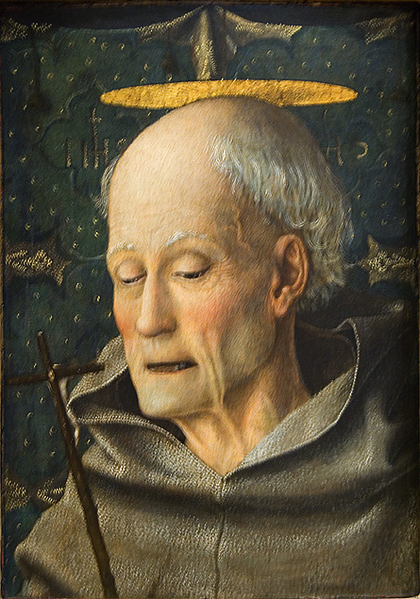
Saint Sebastian - patron saint of homosexuals

It was while researching the subject of sexual crime for my upcoming novel, The Mascherari, that I came across a period of repression that swept Late Medieval / Early Renaissance Italy.  This relatively unknown wave of persecutions and executions took place in 15th century Florence but also to a lesser extent in Venice. This phenomenon, which targeted men of homosexual disposition was known as la grande paura, The Great Fear.

To put this Great Fear in context, consider that during the period 1432 to 1502 in Florence, it has been estimated that as many as 17000 individuals were incriminated at least once for sodomy with 3000 convicted.  This is no small figure for a city with a then population of less than 50000.

The Great Fear took place at a time when Florence lay vulnerable following a number of repeated plague attacks. The Black Death of 1348 had swept away as many as 80000 Florentines in a population that was then 120000.  Serious plague outbreaks followed in 1363, 1364 and later in 1417, 1423/1424 and 1430.  In 1410, the population fell to its lowest, probably sparking fears about population numbers, and further consolidating any non-procreative sexual acts as threats to the city’s dwindling numbers.

But the rise in prosecutions can be attributed to more than just dwindling population numbers. In short, the Great Fear was fear of God's wrath.

Sodomy in Late Medieval Italy

In medieval parlance, sodomy was a broad term which for the Church, encompassed not only anal sex practices, but also masturbation, and any form of sexual activity – fellatio being an example – which did not lead to procreation.

In the 14th and 15th century, medieval Italy was no stranger to heterosexual anal sex. This practice was performed consciously between couples to avoid pregnancy.  For this reason, it was frowned upon by the Catholic Church for whom the sole purpose of sex was procreation.

But more vile in the eyes of the Catholic Church, was the sodomy inherent in homosexuality. This “abominable sin” was greatly feared because it posed the threat of inviting divine wrath.  While the term sodomy denounced any sexual acts that were deemed, then, as contra natura, or “contrary to nature”, it was usually the conspicuous act between two men which came to mind most of the time when people spoke the word.

Florence – the Great Sodom

The city of Florence was once considered as the modern Sodom. For much of the 14th and 15th century, Florentines more than their other Italian counterparts, had a reputation for engaging in what was then termed as the game in the behind. Venice, too, saw a rise in same-sex liaisons in the 15th century but this surge was thought to have sprung from Florence.

The Spread of the Great Fear

The rising intolerance towards homosexuals can almost be likened to the recent modern intolerance that took place in the late 1980s during which homosexuals were scapegoated for a raging and incurable disease which confounded physicians. Just as the spread of AIDs would focus the modern psyche on an “offending” subculture, so too did the scourge of bubonic plague experienced in the early 15th century bring about the scapegoating of homosexuals.


Bernardino di Siena

In the early 1420s, a particular religious preacher is notable for his spread of paranoia and his call to action against homosexuals. This man, Bernardino di Siena, preached at length in Siena and then later in Florence.

In short, Bernardino di Siena blamed sodomites for causing the plague. He believed that the plague was sent by God as punishment for the sins of sodomy. He also blamed population losses to sodomites’ apathy towards women, their reluctance to marry and their sterile sexual practices. “You don’t understand that this is the reason you have lost half your population over the last twenty-five years. Tuscany has the fewest people in any country in the world, solely on account of this vice,” he said.

In 1424, Bernardino di Siena launched a sermon in Florence during which he said, “For if they don’t marry they become sodomites. Make this a general rule: when you see a grown man in health who doesn’t have a wife, you can take this as an evil sign about him, especially if he hasn’t chosen for spiritual reasons to live in chastity.”  His remarks had a profound effect well into the later part of the century, in that most men of all ages who were later implicated in sodomy appear to have been unmarried.

While Bernardino can be applauded for denouncing such practices as the pimping of young boys by their fathers – often to procure themselves with privileges from the abducting party – or for warning parents about the potential dangers faced by their sons in a city where rape of boys was common, he nevertheless remains a disturbing figure for his stirring of hatred towards those men whose only crime was to favor other men.  In particular Bernardino painted sodomites as unstable, selfish and dangerous.  As explained earlier, he attributed anything that was unpredictable in the human experience – including the plague, wars and floods – to sodomy.

In his diatribes against what he called “feminised” men, he went as far as scolding mothers for dressing-up their sons to be too attractive.  He clearly suffered from an anxiety about gender distinctions. “They’re the beautiful color of hyacinth, these boys of yours become girls. Shame on you, fathers and mothers! [..] don’t send them out spruced up like maidens!” or even “Oh Silly, foolish woman, it appears you make your son look like yourself, so that to you he’s quite becoming: ‘Oh, isn’t he the handsome lad!’ and even ‘Isn’t he the pretty girl!’ “

His misogynistic beliefs also saw him advise mothers to lock up their sons indoors and only let out their daughters: he believed that even if their daughters were raped, it was “less evil” and therefore less offending to God then sodomy perpetrated on their sons.

Bernardino also accused Tuscans of being too lenient towards sodomites.  While in Florence, he praised examples of justice meted out to sodomites in other parts of Italy. He described how a man convicted of sodomy in Verona (then part of the Venice Republic) had been quartered and his limbs hung from the city gates; he noted that in both Genoa and Venice, sodomites were burnt.  In Venice, he taunted, they really applied justice.

In April 1424, as part of Lent, Bernardino gave a series of speeches against sodomy in which he called onto people to spit whenever they heard sodomy mentioned: “If they won’t change their ways otherwise, maybe they’ll change when they’re ridiculed. Spit hard!” On April 9, he roused the people by shouting, “To the fire! They are all sodomites! And you are in mortal sin if you try to help them!”

Prosecution prior to the Great Fear

While punishments against sodomy had previously existed in Florence, as Bernardino expounded, they were not as harsh as those in Venice.  The nature of the crime had long decided the conviction. For example, the rape of young boys or ‘giovanni’, was more severely punished than outright acts between two consenting male adults. The prosecution for a foreign man abusing local boys was even harsher.  Another consideration was whether the willing party was an ‘active’ or ‘passive’ partner, the ‘passive’ partner being usually fined. The amount of this fine rose with the boy’s age, reflecting a belief in the diminishing innocence of his act.  But for various social reason, it was often difficult to pursue certain individuals, and accusations did not often lead to punishment. To further cloud judicial matters, sodomy was well ingrained in every level of Florentine society including, no doubt, the higher levels of government.

Overall, prior to the 1430s, it appeared that sodomy did not attract much court attention.  According to Michael Rocke’s research of Florence judicial records dating from 1390 to 1410, only 33 persons were found convicted of cases involving sodomy, including 10 for attempting sodomy only. These cases dealt mostly on rape against young children. Very few individuals were condemned for consensual non-coercive relations. This was perhaps what Bernardino di Siena had termed as ‘lenient’.

The Signori di Notte’s Repression

In 1432, shortly after Bernardino’s inflamed sermons, the Florence regime finally appointed an institution, the Office of the Night, to “root out” sodomy.  This time, it was declared, there would be no lenience. The Office of the Night existed from 1432 to 1502 during which it administered a pervasive repression regime, targeting homosexuals.  In each year of the last four decades of the 15th century, an average of 400 people were implicated and 55 to 60 condemned for homosexual relations. Again this number is astounding considering the population at the time.

It was believed that the exercise of justice against sodomites would help appease God and prevent his wrath. Officials asserted that in such way, “the city and its upright citizens may be freed from all commotion, wars ended, plague abolished, enemy plots curbed” and so on.

The Officers of the Night operated through secret denunciations, calling onto the public to make accusations for which they did not require proof. As an incentive, accusers were offered financial rewards, calculated as a proportion of the convicted sodomite’s fine. Accusations were dropped in a box or tamburi affixed to churches in Florence and several nearby towns.  As would be expected, this system was not flawless. It was thought to lead to false accusations especially between enemies or between those still grieving old disputes.

The Night Officers also employed spies who ferreted out information and made their own accusations. Penalties ranged from various levels of fines to exile, interdiction from office, and at worst, execution.

Prosecutions in Venice

In Venice, the fear of sodomy was so great that the government body who took charge of prosecuting those suspected of homosexuality was no other than the same body of men entrusted with State security. This group of men, The Council of Ten, had enormous power which by 1430, equalled that of the Senate.

The so called Consiglio Dei Dieci were tasked with three main responsibilities: the peace and security of the Republic; the Venetian coinage; and the prevention of moral corruption, including sodomy.
In Venice, the punishment for sodomy was great, ranging from exile, maiming or burning.


As I found while researching for my novel, The Mascherari, the insidious powers of the Consiglio Dei Dieci often extended beyond the law and cannot be underestimated. The following case clearly exemplifies this idea.

In 1406 to 1407 a large group of homosexuals, including a number of young nobles and clergymen, were discovered by the Signori di Notte in Venice. Because the moral crime was serious and the penalty was burning, the Council of Ten stepped in.  However it was found that 16 or 17 Venetians from within the group were from the highest patrician families and so, the Council of Ten suppressed evidence and reduced the number of those executed to a minimum.

Still The Council of Ten made a concerted effort to “root out” the evil of sodomy.  For example, in 1455, it decreed that a certain number of places were to be placed under police surveillance since they were gathering places for sodomites. This included the porch of the Santa Maria Mater Domini church in the district of Santa Croce.

Again in 1460, the Council of Ten ordered physicians to send a report to the Council within 3 days after treating any man or woman whose anus had been damaged by sodomy…

But according to Rocke, the prosecutions seen in Florence far exceeded those in any other city on record, either in Italy or in Europe. In Venice for example, from 1426 to 1500, at a time roughly equivalent to the tenure of Florence’s Office of the Night, authorities prosecuted only 411 individuals and from 1406 to 1500, they convicted only 268.  In Genoa, only 5 persons were convicted from 1444 to 1500 while in Palermo, an estimated 100 men were executed for homosexual sodomy from 1567 to 1640.

Clearly the wave of repression experienced in Florence was unparalleled and remains a fascinating albeit disturbing subject of study.

Even more disturbing, at least for those who are more progressively minded, is that Bernardino di Siena, who actively preached against witchcraft and sodomy during the 15th century, is today a Catholic Saint.

___________________________________

A fantastic source of historical information for a subject that is given scant attention, Michael Rocke’s Forbidden Friendships – Homosexuality and Male Culture in Renaissance Florence was a valuable read for both my novel writing research and beyond.