Showing posts with label council of ten. Show all posts

Tuesday, October 13, 2015

The Mascherari: A Novel of Venice - Now a Movie


It is the dream of many writers to see their creations up on the big screen. Historical novelists understand that a cinematic production is a welcome companion to a novel - bringing to life the glow of characters, their costumes, their emotions and all the drama and vibrancy of complex period sets. From Game of Thrones to the humble The Book Thief, people all over the world wish to see stories enacted. Even those who prefer the written word over film, possess an innate curiosity to compare, contrast or else discover the 'how' - how the story will be executed, how the story will become cinema.

For me the two are inseparable. I have respect for both writing and film making. I see film as its own creation - a unique dance between light, sound, art, acting and the talent of another breed of storyteller informed with semiotic sensitivity - the director.  I see film as a powerful marketing device for writers who are too often shy of media platforms. I see films as recognition that something is worth projecting to screen and worth disseminating visually to those who might not enjoy reading but who are lovers of good entertainment.

Mostly, I see film as a wonderful opportunity to reveal my characters.

Indulge me. Are you ready to discover The Mascherari: A Novel of Venice like never before? I hope you will like my casting. 

Magdalena / Elena - Phoebe Tonkin

Blessed with sultry, sensual looks that render her almost Mediterranean, this Australian beauty, born in Sydney, already has a solid supernatural film background under her belt.

In H20 she has played a Mermaid and now has recently appeared in Vampire Diaries

I love how this actress can appear Italian and has a certain raw quality that is perfect for the Naples-born character.


The gossipers of Venice brand Magdalena a witch, but she is more than that - an artist, a devoted wife and in a world ruled by men, a free-spirit who never gives up.

Phoebe's velvety, breathy voice is also perfect for this witch, this janara who captivates and haunts.  

Phoebe could play both the roles of Magdalena and her daughter, Elena, in the same way Natalie Portman interpreted two roles in Goya's Ghosts. A perfect cast. 


Antonio da Parma - Mark Strong

I have a big crush on this guy ever since I saw him in the role of Hani Salaam in Body of Lies. Actually what struck me in the film was the palpable, yet understated chemistry between Hani and Leonardo di Caprio's character. This sexual ambiguity is perfect for the role of Antonio da Parma. 

But what befits this character most is that Mark Strong (whose real name, by the way, is Marco Giuseppe Salussolia) has a thrilling broodiness, while his sharp gaze burns with intuitive intelligence. In short, the would-be inquisitor inspires fear even as he seduces. 

There is also a secretive quality in his eyes which is crucial for the role.  Finally Mark Strong is over 1,90m and would stand nicely alongside a particular someone who happens to be my favourite character...the towering Esteban del Valle.

Oh, I forgot to add that Mark Strong looks dashing in a turban - which as you know, is all the rage in 15th century Venice. Bring it on!


Esteban del Valle - Omar Sy

Wonder of wonders, it's Esteban. What a handsome, charming and noble soul. It has to be Omar Sy. No other will do. 

Masked for most of the film, the actor will only reveal his face twice. Yet you will see more of him than any other character because all the drama and panache is about this mysterious Catalan-born Venetian - the way he moves, such that even Antonio da Parma cannot stop looking at him, the way he dresses, the way he wields his sword, his daring, the boldness of his voice - all this, while in him dwells the purest of hearts.

Esteban del Valle and Omar Sy seem to share a few things in common. Esteban del Valle is a deeply altruistic and street-savvy character.  Meanwhile, with his deep involvement in the charitable organisation CEKEDUBONHEUR, it's not for nothing that Omar Sy was recently called "Omar au grand coeur".  (Omar with the big heart.)

Omar Sy it is. The Senegalese actor is perfect for the role of this talented part-Ghanaian sword master and traveler. This is because geographically, Ghana during the 15th century was not actually the same Ghana as today...nuance! 

Omar Sy - in tights, velvet and a cape. Add a mask and a sword. 
Is your heart melting yet? 


Catarina Contarini - Jessica Chastain

No stranger to horror and supernatural roles (Mama, Crimson Peak), Jessica Chastain will interpret the romantically tormented, intense and scheming patrician woman whose concealed designs set in motion the whole drama of The Mascherari

I admit I also chose Jessica because she was a red head, just like Catarina.  

From carnal to puritan, victim to Judas, Jessica Chastain will unveil a breadth that she has not displayed previously. Yet there will always remain that cool reserve she showed in A Most Violent Year, all the while fires will burn within. Fires will burn,  because what matters is that she will be fully smitten by her husband and relentless like no other in her jealous pursuit of happiness.


Giacomo Contarini - Martin Csukas

Ever since I saw Martin Csukas alongside Vin Diesel in xXx, I was hooked.

Actually before settling on Martin for the role of patrician merchant, Giacomo Contarini, I had envisaged actor, Oscar Isaac with a beard...but that didn't work very well.

Yes, Martin will be heavily bearded, grow his hair down to his shoulders Yorgi-style and wear tights, boots and ermine capes. 

The patrician will gesticulate as he did in xXx, command attention and have that alluring sex appeal that so attaches his wife to him. 

Just like in xXx he will enjoy his women, enjoy deceiving others and will have an innate misogyny.
And he looks Italian! 

Rolandino Vitturi - Riccardo Scarmacio

There is no other character in The Mascherari, apart from Francesco Visconti, who is more taunted than Rolandino. 

When we first encounter the broker, he is brash and boastful but it conceals his anxieties and deep animosity. 

Later in prison, he is haunted, weepy and incoherent. The Council of Ten assert that he must be mad. Madness is what I see in Riccardo Scarmacio's unruly, intense gaze. It's great! 

I like his energy, a quality that could translate into violence - something that Rolandino exhibits in the story more than others notably in his cruel treatment of our maskmaker, Francesco Visconti.


I also feel that this Italian actor could portray emotional desperation - he could be that guilt-ridden man, and I think he would be a delicious victim for our witch. 

Almoro Donato - Terrance Stamp

The Council of Ten member must inspire fear, respect and everything that is powerful about the Venice Republic. 

He must seem respectable, knowledgeable and wise. There must be authority in his demeanor while his facial structure should not depart widely from Mark Strong's to make it more plausible that this one could disguise himself as the Council member and break into the secret archives of the palace...

Terrance Stamp is perfect.  He will need to wear brown contact lenses.


Francesco Visconti - Leonardo di Caprio

Do you sometimes want to challenge actors? I have seen so much bravado and self-sufficiency in Leonardo di Caprio. Even when he is vulnerable, he never looks downtrodden enough. 

I want to see him broken. I want to see him as the Milanese, Francesco Visconti. Penniless, maintained for years by his beautiful wife, Magdalena, a newly-taught artist with a complete ignorance of the treachery in others' hearts.  In a world of schemers and hypocrites, himself incapable of masks and the victim of foul murder, Francesco Visconti IS the mascheraro.  

Francesco is that soul who is wronged.  What attracts Magdalena is that Francesco is the complete opposite of Giacomo Contarini.  

Can Di Caprio portay a character devoid of pride, can he be vulnerable? Can he make you cry? I know he can do it. 

Francesco Visconti is older than the actor but as we saw with his recent beard-do in The Revenant, Di Caprio can easily pull off a more mature look.  He will need to whiten his hair and put on a little weight.

Battista Alberti - Richard Madden

In all evidence from 15th century sculptures and portraits, our Italian Renaissance Man with his generous curls and well-formed lips was ever boyish and good looking.

For the first time in cinema's history, Leon Battista Alberti will come to life through no other than actor, Richard Madden. Incidentally Richard has just been cast as another Florentine for a TV series covering the Medici family. I had no idea he would interpret Cosimo de Medici when I made my decision.

The Game of Thrones actor resembles Alberti nicely - he can also do fresh-faced, as he did in Cinderella, but we will limit it to just enough youthful charm.

Times are hard when you are an orphaned, disinherited youth, striving to study and survive in the Venice Republic. Thank heavens, the nineteen year old Alberti has learned to use his wits, and will soon employ his secret talents to come to Antonio da Parma's aid.

That is the cast so far, I hope to supplement as I go along. What are your thoughts? Have you read the book and who do you see as playing the characters?

The casting is almost done.  That's the easy part. Now I just need 30 million dollars.


Wednesday, July 16, 2014

The Mascherari - Magdalena


In The Mascherari, my protagonist, Antonio da Parma, is haunted by visions of a beautiful and mysterious woman. Her name is Magdalena. For months after completing the novel, I pondered over Magdalena's features and over who I could best use to illustrate the raw quality of her beauty. I was pleasantly surprised when I chanced upon a photo of a long admired actress with an Italian origin.

Here it is, then; a portrait of Magdalena on canvas. It is based on a dark-haired version of the young Ornella Muti. She is perfect.


Chapter One


     Journal of Antonio da Parma

     He dreams on a gondola as it glides in silence.  Sound asleep, he lies, beneath a fiery dawn, while the palace’s Eastern wing rises above, and casts golden shadows upon his face.
     This is how I may have appeared to my guide as I drifted off, while he strained with the oar, drawing us closer to the Ducal stones, closer, beneath the towering Campanile, closer to this monstrous Republic of galleys with its islands and canals, into the heart of this lagoon fortress gilded by the sun’s first rays, and past her mansions of Istrian stone, whose glorious facades looked on, across a sea of silk and glistening foam.
     Curious, isn’t it?  How I saw her.
     I would see her differently now.
     Daughter of Venus, Venezia, you rose from nothingness. The memory of you…
     How could this not be my first diary entry?  For it was that day, as I arrived in Venezia, that I experienced my first vision.
     She was standing on the Rialto Bridge.  I write, standing, but now that I remember–and it is hard to recall after all that has transpired since–I think, yes... I think she was floating.  I swear that I never once saw her feet touch the ground.   I remember the fluttering hem of her gown and the way it thinned into a vaporous mist. I remember that I crossed myself and whispered the names of the saints upon seeing her face for the first time.
     She stood alone. She was watching me.
     And I, I saw only her.
     She seemed to have eluded the vanity of Venetian women.  Perhaps she did not live in our times. She cared not for the blonde locks they coveted, had not shaved her forehead in the new fashion, and wore no silk, nor jewelry.  Her hair–I crossed myself again–for it was night, and her black locks were like the manes of a strega; insolence upon her shoulders.
     Oh, the dark beauty of that face.
     I saw, even from afar, the longing eyes beneath their sultry lashes and the parting of her lips as she whispered.  She resembled those Southern women or perhaps those forbidden beauties of Constantinople into whose eyes one dares not stare too long, for fear of some lurking evil.
     It struck me at this instant. I ignore how, it struck me that this woman was a harbinger of some fateful event, one that I was soon to encounter, here, in Venezia.
     The sun rose, filtering light through the rios, casting flames upon her black hair. My gondolier’s vessel meandered through the lagoon.  Light shone on the Canal Grande.
     Still in dream, I gazed at her form but she drew away. No, she floated away, vanishing to the other side of the bridge. And as the morning rays bathed Rialto Market, not a trace of her remained.
     The loss of her wounded me.  Abandoned by the unsettling vision, I rose from my slumber.  I awoke to the stern Ducal Palace looming over our gondola.  It lay still.  As silent as its secrets.
     Later that morning, I spoke of my vision to Almoro Donato, member of the Consiglio dei Dieci.  He told me what I did not want to hear.
     “Antonio. Antonio, you grieve, my friend. But it must end. Yes, don’t you see? You must find a new wife, si?  With so much beauty in Venezia, a man like you—“
     “Basta.  I am already past the fourth decade. I care not for another wife.  It was not her I saw in the dream.  The woman, there was something about her—”
     But he interrupted me.  I think he has studied me carefully over the years. I suppose his position demanded it.  It was under his recommendations that Venezia had appointed me, a Florentine, for the second time. The Consiglio dei Dieci had a well-earned reputation for respecting nobody’s secrets and my employer was a master spy.  He gave me that look of wariness, that short disapproving glare which I remembered from years before.
     “Ah, Antonio, see how you drift again. Your preoccupations always lead you into visions. But remember your place, avogadore.  I will ask you to prepare for your future role within the commune, yes? We will have none of that in the Republic, will we?”
     He looked at me again.
     “Will we, Antonio?”
     I may have shrugged my shoulders, but the foreboding manner of his words taunted me, even then.
     As we crossed inside the palace’s entrance hall, I waved away my unpleasant feelings. I cast aside my dream.  Already Venezia tugged at my soul but I attributed my ill-feeling to his sermon.
     “Tommaso Mocenigo is very ill,” he explained, gesturing gravely toward the Doge apartments to our left. “He has been confined to bed for weeks already. When the New Year commences next March, do not be surprised if the patricians are called upon to appoint a new Doge. It is not known how many months Tommaso has to live but I feel his time is near.  And between you and me,” he whispered, “our young procurator, Francesco Foscari, would want this time to be nearer still.” He cleared his throat. “Antonio, the Consiglio would prefer it if you remained in Venezia until then.”
     I started. “Until March?”
     His eyes narrowed. I understood that I had little choice.
     I calculated that I would remain in Venezia until at least the commencement of Lent.
     And the realization struck me.
     Carnivale is upon us; diabolic days where madness surges and unfolds, unrelenting. Where the masses of Venezia, the popolani, forget themselves into debauchery and descend ever deeply into the odious core of their fettered being.  Carnivale, a season of obscene songs and erotic dance, when the masked rival for attention while making believe they are free.
     I never long so dearly for the rolling hills and scented valleys of Tuscany as when I find myself in the Republic during the infernal period of Carnivale.
     I refrained from sharing my thoughts and moved inside the Consiglio dei Dieci gathering room for my briefing.
     It was after my visit to the palace, when my gondolier had led our boat through the nation of Santa Croce, that I encountered the first abomination.


***


Friday, September 6, 2013

La Grande Paura - The Great Fear

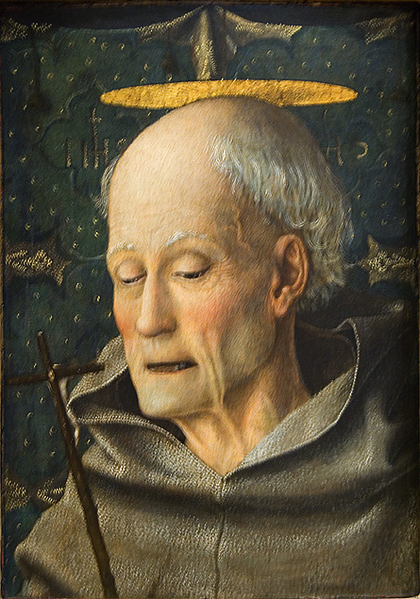
Saint Sebastian - patron saint of homosexuals

It was while researching the subject of sexual crime for my upcoming novel, The Mascherari, that I came across a period of repression that swept Late Medieval / Early Renaissance Italy.  This relatively unknown wave of persecutions and executions took place in 15th century Florence but also to a lesser extent in Venice. This phenomenon, which targeted men of homosexual disposition was known as la grande paura, The Great Fear.

To put this Great Fear in context, consider that during the period 1432 to 1502 in Florence, it has been estimated that as many as 17000 individuals were incriminated at least once for sodomy with 3000 convicted.  This is no small figure for a city with a then population of less than 50000.

The Great Fear took place at a time when Florence lay vulnerable following a number of repeated plague attacks. The Black Death of 1348 had swept away as many as 80000 Florentines in a population that was then 120000.  Serious plague outbreaks followed in 1363, 1364 and later in 1417, 1423/1424 and 1430.  In 1410, the population fell to its lowest, probably sparking fears about population numbers, and further consolidating any non-procreative sexual acts as threats to the city’s dwindling numbers.

But the rise in prosecutions can be attributed to more than just dwindling population numbers. In short, the Great Fear was fear of God's wrath.

Sodomy in Late Medieval Italy

In medieval parlance, sodomy was a broad term which for the Church, encompassed not only anal sex practices, but also masturbation, and any form of sexual activity – fellatio being an example – which did not lead to procreation.

In the 14th and 15th century, medieval Italy was no stranger to heterosexual anal sex. This practice was performed consciously between couples to avoid pregnancy.  For this reason, it was frowned upon by the Catholic Church for whom the sole purpose of sex was procreation.

But more vile in the eyes of the Catholic Church, was the sodomy inherent in homosexuality. This “abominable sin” was greatly feared because it posed the threat of inviting divine wrath.  While the term sodomy denounced any sexual acts that were deemed, then, as contra natura, or “contrary to nature”, it was usually the conspicuous act between two men which came to mind most of the time when people spoke the word.

Florence – the Great Sodom

The city of Florence was once considered as the modern Sodom. For much of the 14th and 15th century, Florentines more than their other Italian counterparts, had a reputation for engaging in what was then termed as the game in the behind. Venice, too, saw a rise in same-sex liaisons in the 15th century but this surge was thought to have sprung from Florence.

The Spread of the Great Fear

The rising intolerance towards homosexuals can almost be likened to the recent modern intolerance that took place in the late 1980s during which homosexuals were scapegoated for a raging and incurable disease which confounded physicians. Just as the spread of AIDs would focus the modern psyche on an “offending” subculture, so too did the scourge of bubonic plague experienced in the early 15th century bring about the scapegoating of homosexuals.


Bernardino di Siena

In the early 1420s, a particular religious preacher is notable for his spread of paranoia and his call to action against homosexuals. This man, Bernardino di Siena, preached at length in Siena and then later in Florence.

In short, Bernardino di Siena blamed sodomites for causing the plague. He believed that the plague was sent by God as punishment for the sins of sodomy. He also blamed population losses to sodomites’ apathy towards women, their reluctance to marry and their sterile sexual practices. “You don’t understand that this is the reason you have lost half your population over the last twenty-five years. Tuscany has the fewest people in any country in the world, solely on account of this vice,” he said.

In 1424, Bernardino di Siena launched a sermon in Florence during which he said, “For if they don’t marry they become sodomites. Make this a general rule: when you see a grown man in health who doesn’t have a wife, you can take this as an evil sign about him, especially if he hasn’t chosen for spiritual reasons to live in chastity.”  His remarks had a profound effect well into the later part of the century, in that most men of all ages who were later implicated in sodomy appear to have been unmarried.

While Bernardino can be applauded for denouncing such practices as the pimping of young boys by their fathers – often to procure themselves with privileges from the abducting party – or for warning parents about the potential dangers faced by their sons in a city where rape of boys was common, he nevertheless remains a disturbing figure for his stirring of hatred towards those men whose only crime was to favor other men.  In particular Bernardino painted sodomites as unstable, selfish and dangerous.  As explained earlier, he attributed anything that was unpredictable in the human experience – including the plague, wars and floods – to sodomy.

In his diatribes against what he called “feminised” men, he went as far as scolding mothers for dressing-up their sons to be too attractive.  He clearly suffered from an anxiety about gender distinctions. “They’re the beautiful color of hyacinth, these boys of yours become girls. Shame on you, fathers and mothers! [..] don’t send them out spruced up like maidens!” or even “Oh Silly, foolish woman, it appears you make your son look like yourself, so that to you he’s quite becoming: ‘Oh, isn’t he the handsome lad!’ and even ‘Isn’t he the pretty girl!’ “

His misogynistic beliefs also saw him advise mothers to lock up their sons indoors and only let out their daughters: he believed that even if their daughters were raped, it was “less evil” and therefore less offending to God then sodomy perpetrated on their sons.

Bernardino also accused Tuscans of being too lenient towards sodomites.  While in Florence, he praised examples of justice meted out to sodomites in other parts of Italy. He described how a man convicted of sodomy in Verona (then part of the Venice Republic) had been quartered and his limbs hung from the city gates; he noted that in both Genoa and Venice, sodomites were burnt.  In Venice, he taunted, they really applied justice.

In April 1424, as part of Lent, Bernardino gave a series of speeches against sodomy in which he called onto people to spit whenever they heard sodomy mentioned: “If they won’t change their ways otherwise, maybe they’ll change when they’re ridiculed. Spit hard!” On April 9, he roused the people by shouting, “To the fire! They are all sodomites! And you are in mortal sin if you try to help them!”

Prosecution prior to the Great Fear

While punishments against sodomy had previously existed in Florence, as Bernardino expounded, they were not as harsh as those in Venice.  The nature of the crime had long decided the conviction. For example, the rape of young boys or ‘giovanni’, was more severely punished than outright acts between two consenting male adults. The prosecution for a foreign man abusing local boys was even harsher.  Another consideration was whether the willing party was an ‘active’ or ‘passive’ partner, the ‘passive’ partner being usually fined. The amount of this fine rose with the boy’s age, reflecting a belief in the diminishing innocence of his act.  But for various social reason, it was often difficult to pursue certain individuals, and accusations did not often lead to punishment. To further cloud judicial matters, sodomy was well ingrained in every level of Florentine society including, no doubt, the higher levels of government.

Overall, prior to the 1430s, it appeared that sodomy did not attract much court attention.  According to Michael Rocke’s research of Florence judicial records dating from 1390 to 1410, only 33 persons were found convicted of cases involving sodomy, including 10 for attempting sodomy only. These cases dealt mostly on rape against young children. Very few individuals were condemned for consensual non-coercive relations. This was perhaps what Bernardino di Siena had termed as ‘lenient’.

The Signori di Notte’s Repression

In 1432, shortly after Bernardino’s inflamed sermons, the Florence regime finally appointed an institution, the Office of the Night, to “root out” sodomy.  This time, it was declared, there would be no lenience. The Office of the Night existed from 1432 to 1502 during which it administered a pervasive repression regime, targeting homosexuals.  In each year of the last four decades of the 15th century, an average of 400 people were implicated and 55 to 60 condemned for homosexual relations. Again this number is astounding considering the population at the time.

It was believed that the exercise of justice against sodomites would help appease God and prevent his wrath. Officials asserted that in such way, “the city and its upright citizens may be freed from all commotion, wars ended, plague abolished, enemy plots curbed” and so on.

The Officers of the Night operated through secret denunciations, calling onto the public to make accusations for which they did not require proof. As an incentive, accusers were offered financial rewards, calculated as a proportion of the convicted sodomite’s fine. Accusations were dropped in a box or tamburi affixed to churches in Florence and several nearby towns.  As would be expected, this system was not flawless. It was thought to lead to false accusations especially between enemies or between those still grieving old disputes.

The Night Officers also employed spies who ferreted out information and made their own accusations. Penalties ranged from various levels of fines to exile, interdiction from office, and at worst, execution.

Prosecutions in Venice

In Venice, the fear of sodomy was so great that the government body who took charge of prosecuting those suspected of homosexuality was no other than the same body of men entrusted with State security. This group of men, The Council of Ten, had enormous power which by 1430, equalled that of the Senate.

The so called Consiglio Dei Dieci were tasked with three main responsibilities: the peace and security of the Republic; the Venetian coinage; and the prevention of moral corruption, including sodomy.
In Venice, the punishment for sodomy was great, ranging from exile, maiming or burning.


As I found while researching for my novel, The Mascherari, the insidious powers of the Consiglio Dei Dieci often extended beyond the law and cannot be underestimated. The following case clearly exemplifies this idea.

In 1406 to 1407 a large group of homosexuals, including a number of young nobles and clergymen, were discovered by the Signori di Notte in Venice. Because the moral crime was serious and the penalty was burning, the Council of Ten stepped in.  However it was found that 16 or 17 Venetians from within the group were from the highest patrician families and so, the Council of Ten suppressed evidence and reduced the number of those executed to a minimum.

Still The Council of Ten made a concerted effort to “root out” the evil of sodomy.  For example, in 1455, it decreed that a certain number of places were to be placed under police surveillance since they were gathering places for sodomites. This included the porch of the Santa Maria Mater Domini church in the district of Santa Croce.

Again in 1460, the Council of Ten ordered physicians to send a report to the Council within 3 days after treating any man or woman whose anus had been damaged by sodomy…

But according to Rocke, the prosecutions seen in Florence far exceeded those in any other city on record, either in Italy or in Europe. In Venice for example, from 1426 to 1500, at a time roughly equivalent to the tenure of Florence’s Office of the Night, authorities prosecuted only 411 individuals and from 1406 to 1500, they convicted only 268.  In Genoa, only 5 persons were convicted from 1444 to 1500 while in Palermo, an estimated 100 men were executed for homosexual sodomy from 1567 to 1640.

Clearly the wave of repression experienced in Florence was unparalleled and remains a fascinating albeit disturbing subject of study.

Even more disturbing, at least for those who are more progressively minded, is that Bernardino di Siena, who actively preached against witchcraft and sodomy during the 15th century, is today a Catholic Saint.

___________________________________

A fantastic source of historical information for a subject that is given scant attention, Michael Rocke’s Forbidden Friendships – Homosexuality and Male Culture in Renaissance Florence was a valuable read for both my novel writing research and beyond. 


Sunday, April 28, 2013

The Mascherari


Hard at work on my second novel with a rigorous self-imposed deadline. The first draft must be finished by mid-May in time for my joyous trip to France (family reasons) and Venice (research purposes).

I have, for now, abandoned the sexy sci-fi adventure I spoke of over a year back, to pen a historical mystery set in Renaissance Venice.

The Mascherari, is the plural form of the word, "mask maker" in Italian. It is the title of my second novel. Mask makers, as artists, along with their creations have always been a fascination of mine. I have a Pinterest wall devoted to masks which I have called "Los Occultos". It more or less means, "The Hidden". I am intimate with the hidden. It inspires and revives me. You could say I am a vampire for what is secret. And what a feast it is to dwell in 'hidden' Venezia. I can't tell you how much it thrills me. I am in my element.

I will situate this novel with just a few boring facts.

The year is 1422, months before the election of the conquest minded Doge, Francesco Foscari, a significant turning point both politically and economically. But for now, there is prosperity. The Venice Republic rules Padua, Verona and a gaggle of other colonies in the Mediterranean including Cypus, Santorini, Mykonos and Crete. It has long defeated Genoa, its main military rival and is in an on-off alliance with Florence with which it remains for the most part, cordial. It trades heavily with Constantinople and  is happy to ignore the Catholic Church if this one interferes with its trade and its ability to draw profit from the Muslim lands. It is a peaceful time for the ruling patricians. 1509 is far. The League of Cambrai has not yet arrived at the Republic's doorstep to bring the Venetians to their knees. We are in a golden age.

But a series of gruesome murders is about to take place on the eve of Carnivale. Enter Antonio da Parma. Tuscan, newly widowed, appointed by the Consiglio dei Dieci to investigate these grizzly murders involving a wealthy and not-so virtuous group of senior patricians. One of them, Giacomo Contarini, has an especially dirty past. And judging from the rumours abounding, the Contarini name is doomed to be soiled. Things are not going too well for Antonio da Parma. As an inquisitor, he is known for being susceptible to occultic beliefs, something which we learn has tainted his past investigations. And the Consiglio dei Dieci want none of that.

Antonio da Parma is a captivating man. He says so little about himself in his letters and in his diary. Incidentally I should mention the epistolary form of this novel. Yet we discover so much of his yearnings and passions through the voices of others. We could say that he is the novel's true mystery. Antonio da Parma is also a mystery to himself until he finally discovers the real reason for his being in Venice.

I am having way too much fun writing The Mascherari and describing all the masks, both material and psychological, that I come across. It is a real pleasure. If you think I am writing for myself, you are right.

There is much to keep me enthralled. There is child kidnapping. There is much feasting and Carnivale reveling. There are secret denunciations and sbirri attacks. Sleazy visits to San Cassiano's red-light district. There is an old crone near the Arsenale who sells protective charms. A foreign witch with a beauty so enchanting that she becomes, despite herself, the downfall of a once happy marriage. There is Magic. Encrypted messages. Endless jealousy, Treason, Murder and my favourite part, true Friendship.
Most of all, there is a mystery behind which lies a conspiracy so evil that you will never see Venezia in the same way again...

But I must say this. Even as I paint it with a darkened colour, I love the Republic. She has stolen my heart, that witch. I love everything I have learnt about this early Renaissance period. I love being in the recesses of my mind and speaking with the voices of my characters, being them, dressing like them. Ah, Velvet... Give me Velvet! I love all my characters with their faults, their strengths and their weaknesses. I know that my complete immersion into this world would not have been successful if I had not made a decision to quit my day job. Business analysis, you are far.
But wait for me.

Unfortunately I will find my writing and editing interrupted after the mid year. Still it is a fantastic cause as I will be moving to Sydney, a place where I have long wanted to live. You can say this is a dream come true in a sense. Hard work in another. I will need to return to the 21st century, busy myself with finding the basics of life: shelter; a new day job; and hopefully re-integrate myself into my new city as much as possible.

But if it all goes well, if the artwork progresses as expected, and if I do not fall ill from the jettatura, then The Mascherari should be released by mid-2014.


Tuesday, October 16, 2012

The Council of Ten

I seem to always return to the secret and the mystery within history.

I don't know why.

Some very pleasurable days ahead, wandering in Venice's sestieres, inventing the canals at dawn through the eyes of Antonio da Parma, my main character. In this flurry of research, underneath the silks and draped turbans, beyond the Venetian merchants, the glittery world of artisans and the orgiastic madness of Carnivale; past the putrid den of a Jewish physician who mulls over the sores of a decaying man, I am losing myself in historical works by masters before our time.  Victor Hugo's Angelo.... Lord Byron's The Two Foscari...
And a more sinister joy surges in me, that of encountering those I know. Or rather, I feel I know them well.

The Three Capi and those others...the Consiglio dei Dieci, who we call The Council of Ten.

Am I ready for the evil? The evil of Venice.

Why, yes. Of course.


"

Keep
Those maxims for your mass of scared mechanics,
Your merchants, your Dalmatian and Greek slaves,
Your tributaries, your dumb citizens,
And masked nobility, your sbirri, and
Your spies, your galley and your other slaves,
To whom your midnight carryings off and drownings,
Your dungeons next the palace roofs, or under
The water's level; your mysterious meetings,
And unknown dooms, and sudden executions,
Your "Bridge of Sighs," your strangling chamber, and 
Your torturing instruments, have made ye seem
The beings of another and worst world!
Keep such for them: I fear ye not. I know ye;"

                    - Marina, wife of Jacopo Foscari, to the Council of Ten,
                                                                in Lord Byron's The Two Foscari