Showing posts with label sex in history. Show all posts

Sunday, August 10, 2014

Minotaur Fantasies


When I was a young girl, I was a huge fan of the French-Japanese animated production, Ulysses 31.

Two of my favorite Ulysses 31 episodes were, Ulysses and the Sirens and Ulysses and the Minotaur. All the episodes drew me into Greek mythology but these two stood out.

Read about Ulysses 31 and the Minotaur (or skip to the next section)

In this fantastic sci-fi version of the Greek tale, Theseus and Ariadne-who sports a punk-like androgynous blue hair style-are forbidden lovers a la Romeo and Juliet. Ariadne fails to persuade her father to spare Theseus; King Minos imprisons him in the labyrinth where he is fated to die at the hands of the Minotaur.
Luckily, Ariadne happens to be a super pilot; she boldly flies her vessel to the Minotaur planet in the hope of saving Theseus before this one is mauled by the Minotaur.

On her way, she meets our hero, Ulysses, who has been told-somewhat cryptically-by Aegeus that 'wherever his son, Theseus, is imprisoned lies the secret path back to planet Earth'.  Given that Ulysses is keen to return home, he decides to help Ariadne save Theseus.

Upon landing on Minotaur planet, Sheerka (think: Apple's Siri, but in command of Ulysses' spacecraft) warns them that it is a labyrinth where they will be easily lost. No kidding, Sheerka. The ever resourceful Ariadne happens to have a necklace, whose beads are none other than tiny geo-location emitters. The group uses these beads to track their journey into the labyrinth. Unfortunately, the labyrinth is a dynamic fortress with shifting walls and landscape, reminiscent of Alex Proyas' Dark City. So much for those beads.

Ulysses and Ariadne finally find Theseus and...come face to face with the trident-bearing blue-skinned Minotaur who looks very much like some Indian deity. A battle ensues. When all seems lost, Ulysses throws his laser saber to Theseus and this one finally defeats the Minotaur.

It is then that Ulysses realizes the meaning of Aegeus' words-the path to Earth was never to be found in Minotaur planet, but rather, was a secret possessed by the Minotaur himself. Ulysses feels stupid and misses out yet again on an opportunity to return to Earth. But, we, Ulysses 31 fans don't really care and we hope he remains stranded in space forever so that we can continue to watch this wonderful series.

You can watch the episode here. (In French)


My obsession for this episode was not surprising. Just like mermaids, labyrinths and mazes have fascinated for centuries. Thanks to the legend of Theseus and the Minotaur and to labyrinth engraved coins found at Knossos in Crete, one of the best known mazes in the Western world harks from the Minoan Kingdom. Lesser known are further depictions of ancient labyrinths, some carved into rocks, which have been found in Cornwall, India, Peru, Arizona, the island of Sardinia, Galicia in Spain, the UNESCO heritage listed rock drawings of Val Camonica in Northern Italy, and in Morocco.

The World's Largest Maze

This fascination for mazes has even led one man eccentric to build what will be the world's largest maze. Set to open in fall 2014 the maze of Fontanellato near Parma, Italy will be a 7 hectares, eight-pointed star-shaped labyrinth built entirely of bamboo plants with hedges growing as high as 5 meters. This giant labyrinth is the pet project of publisher, art collector and bibliophile, Franco Maria Ricci.
If you fancy a trip to Italy next year, why not hop past Parma and get lost among the bamboo hedges?

Italy's Amazing Mazes

But why stop at Parma? Take your pick. Among those countries with a history of mazes, Italy stands out today by having some of the most fascinating green mazes in the world.

Even in the 18th century, when Napoleon wasn't busy dismantling the Venetian Arsenale and appropriating the wealth of the Venetian navy, he made a visit to Villa Pisani (built for the Venetian family of St Stephan Pisani, starting in 1721), famous for its maze of boxwood hedges. Situated in the town of Stra, the Villa Pisani maze consists of 12 concentric rings with high hedges leading to a central tower. It is said that Napoleon ventured inside this maze and got himself lost. I wish he had stayed there forever.

Speaking of Venice, many history authors, including Peter Ackroyd, have written of its architecture as being labyrinthine. This is actually not a coincidence; let's take a look at the symbolism associated with mazes and some of their uses throughout history.

Baffling Evil Spirits

An ancient belief holds that evil spirits can only travel in a straight line. Perhaps this is what has led many medieval cities from Morocco (Fez, Marrakech), Greece, Spain and Italy to be constructed in roughly labyrinthine manner, with an intricate network of narrow streets some of which bend or end abruptly, others which join up in unpredictable ways. In 1999 while visiting the old town of Toledo, I myself became lost a number of times to the point of anxiety.

This complex architecture was presumably designed to ward off 'evil' and ensure the security of the local dwellers. More likely it was a strategy to aid residents in their defense against potential invasions, given that foreign attackers would more easily find themselves disoriented.

Here, the meaning associated with the labyrinth imagery is that of an 'impenetrable fortress' or a place heavily defended and which is not easily entered. The meaning extends beyond the legend of Theseus, to places like India. For example, Iranian geographer Abu'l-Rayhan Al-Biruni uses a labyrinth illustration in 1045 AD to depict the impenetrable Ravana fortress at Lanka, which according to the Ramayana epic was where the demon Ravana abducted Sita, wife of the hero Rama. Similarly, in the Byzantine period, the 13th century Islamic geographer, Al-Qazwini, made use of a labyrinth drawing to depict a map of Constantinople.


Roman Culture

The legend of Theseus and the Minotaur was very popular with the Romans and through their conquest, the iconography of the Minotaur and the Labyrinth were propagated in Northern Africa and throughout many places in the Mediterranean world. The cultural significance may have ranged from honoring a classical tale, to the idea of conquest, to bravery, to the slaying of bestiality which aligns with the military and imperialist principles of the Romans.

As far as slaying a half-bull creature, the slaying of the Minotaur is vividly reminiscent of the Cult of Mithraism which the Romans practiced. Here, Theseus effectively becomes the Persian entity, Mithras, and slays the bull.

Earliest known Mithraic monument
Rome, ca.98-99 A.D

The labyrinth legend may have also seeped into the 'popular' culture of the period where it hinted to danger, a guarded secret, or to the dwelling of someone less than hospitable. For exampe, in one excavated house in the ruins of Pompeii, one can read the engraved inscription, "Labyrinthus hic habitat Minotaurus" (The Labyrinth; here lives the Minotaur) which in this case sounds like "Beware of Dog". But who knows.


The Etruscans-also a people subjugated by the Romans and whose cultural influence in Italy has been traditionally overlooked as a result of Roman supremacy-already possessed labyrinth depictions in their own art.

For example, on the below Etruscan art strip found on the late 7th century Tragliatella pitcher, the labyrinth image has been labeled "Troy".  Here the labyrinth comes to symbolize once again the "impenetrable fortress" and hints to the battle at Troy.  Indeed, in some regions of antiquity,  labyrinths were known as “Troy towns” -in the sense that Troy had once been constructed to be impenetrable- and the legend held that at the center of the labyrinth, there resided, not a Minotaur but rather a young woman in need of rescue. This woman was commonly thought to be Helen of Troy.


But we will see, later in this article, how the heavy copulation imagery depicted to the far right has led to a wildly different suggestion for the Etruscan symbolism of the labyrinth. For now let's skip ahead to the Middle Ages.

Pilgrimages of the Soul

During the Middle Ages, large labyrinths became featured on the pavements of a number of cathedrals, notably throughout Italy and France. In this period, the labyrinth was conceived as a metaphor for the journey of life and the cleansing of the soul, leading to enlightenment. It was used as a penitent's journey for those who were too ill or too old to take part in the pilgrimage to the Holy City of Jerusalem and or to Santiago de Compostela in Spain.

The penitent would pray and move along the path of the labyrinth on his knees until he reached the center or had gone around a number of loops. It was thought that upon completing their designated path, the penitent had cleansed his or her soul and had attained spiritual growth. From a psychological point of view, this labyrinth metaphor provided a valuable means for meditating, relaxing and finding oneself purified.

Labyrinth Pavement in Chartres Cathedral, France


Getting Lost in Pleasure

The use of hedges in gardens date back to Roman times. In turn, garden mazes may have first been mentioned in 13th century in Belgium. Such mazes developed for entertainment purposes, allowing people to take long pleasurable strolls, engage in conversation, exercise, take part in secret courtships or play games. The patterns and shapes of these hedge mazes vary greatly.

Chateau de Villandry Gardens
Loire Valley, France


Recent Findings - The Maze as a Symbol of Femininity

I indicated earlier that there is possibly a different meaning to the Etruscan labyrinth, one which might hark back to an earlier Bronze Age period. This is indeed the argument of recent researchers.

A prehistoric cave painting of a labyrinth depicted in the Polyphemus Cave, found 9 km North of Trapani in northwest Sicily, has been dated to 3000 BC.  This painting, older than the rock carvings at Val Camonica (which at their earliest are from 1800 - 1000 BC) may well be the oldest known labyrinth in the world.

The labyrinth image is painted in red and measures approximately 50 cm in diameter. It lies in the ceiling of a niche in the cave. The original image is believed to have covered the entire niche vault and slanted down to the wall of the niche. Research suggests that the labyrinth bears a feminine significance - akin to a uterine or vulvar symbol. The use of red paint-which in Paleolithic and Neolithic periods was associated with blood and the color of the female reproductive organs, and therefore with birth and regeneration- also lends support to this claim.

Due to the position of the painting in the niche- which can best be seen while lying down- it has been suggested that the cave may have been a place of sexual ritual. This is to say that a couple would enter the niche, lie down and engage in procreation while gazing at the labyrinth figure above.

Similarly, the Etruscan labyrinth described earlier may be none other than a female uterus or a symbol of regeneration.  This suggestion is supported by the findings on the Tragliatella pitcher (shown in non-PG detail below) which depicts a couple making love beside the labyrinth symbol.


What do you think?

From the 31st Century to the 15th Century
Thanks to watching too many Ulysses 31 cartoons in my youth (and maybe following a bout of historical research), I couldn't help but feature a maze in my latest writing. Nothing fancy, but it's in there somewhere.
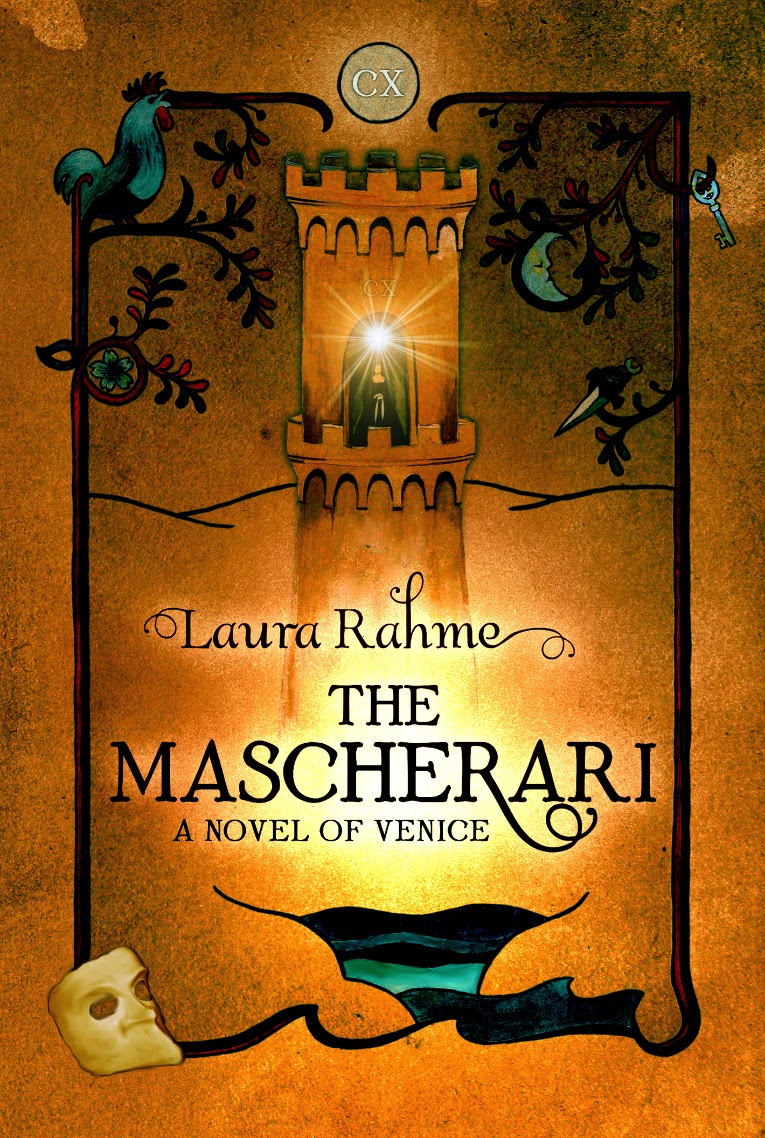


In the historical novel, The Mascherari,which is set in 15th century Venice, the characters become lost in a hedge maze in an island near Venice. While the maze remains fictional, the historical background renders it no less plausible.

After writing The Mascherari, I took a visit to Hyde Park, in Sydney.
Unlike the glorious Italian mazes, Hyde Park is no labyrinth but it adjoins St Mary's Cathedral. In front of the cathedral is Archibald Fountain. Designed by French artist, François-Léon Sicard, and completed in 1926, it is a lavish fountain graced by three statues.

Two of these made me smile.

One is a statue of the Goddess Diana holding a bow. The other depicts Theseus slaying the Minotaur.

They were perfect.



More reading:

Rigoglioso, Marguerite, "The Oldest Labyrinth in the World? The Polyphemus Cave Painting." Caerdroia - The Journal of Mazes and Labyrinths. Volume 29, (1998):  pp 14-22. 


Monday, October 14, 2013

Historical Fiction Novels with Gay, Lesbian and Bisexual Characters


Back in the 1990s, when I first read Alice's Walker's The Color Purple and later saw the highly moving film adaptation, I remember how it spoke to me emotionally on several levels. This African-American historical novel became my favorite for several years. I still love it. While the story contains several touching highlights, I remember that nothing was more significant for me than Celie and Shug's relationship. I completely identified with Celie and her adoration for the sultry blues singer. Celie's lack of self-esteem and her need for a hero, a female at that, one who could inspire and comfort her, all of it was immediately accessible. I don't think I found the same emotional depth in any other heterosexual romance on screen. To this day, this faithful portrayal of love between two women remains with me.

Before the turn of the century, I discovered other depictions of what we would today call GLBT relationships in fiction. The first that stood out were those portrayed by Anne Rice. I read them all, from The Vampire Lestat to The Vampire Armand. Anne Rice's vampires are immensely appealing. Their sexual conquests enviable. Lestat, Armand, even David Talbot who headed the Talamasca, all men with bisexual tendencies. Men with appetites. Exactly what one would expect from those who experience the supernatural realm on a daily basis.


I admired Anne Rice's characters but from a GLBT social perspective, they were not as groundbreaking. I think this is because supernatural characters, as per their definition, are more easily given liberties to enact out of the ordinary behaviors. Even readers who oppose certain behaviors in real life will wave these behaviors in a supernatural character. For me, the sexual orientation in Anne Rice's characters soon became relegated to the extraordinary and this was dangerous because it perpetuated the freakish aspect of GLBT sexualities. We see the same effect in Oscar Wilde's The Picture of Dorian Gray. A sexuality that led to the author's harsh imprisonment and his eventual death, is nevertheless permitted in his characterisation of the sinful Dorian because this one is, after all, an evil freak who sold his soul to the devil in exchange for his youthful looks.


These depictions remain nevertheless highly entertaining and fascinating in their rich sensuality and in the taboo they explored at the time. 

I want to veer away from the freaks and the superhumans, no matter how attractive, and instead examine those ordinary GLBT characters. Characters who, because they do not feature explicitly in self-professed Gay and Lesbian literature and also because they are brought alive in recreated historical periods, serve to anchor GLBT relationships into social normalcy, both in the present and throughout history. 

I want to look at historical novels that accurately highlight behaviors that were always present in history, whether or not these were socially and culturally condoned at the time. These novels hint, provide glimpses or else matter-of-factly point to their historical characters' sexual orientation. They do not make a huge deal out if it, which would defeat the created 'sense of ordinariness'.

These books say something quite powerful about such relationships, "Love it or leave it, but you cannot change the past". The ordinariness and mere presence of GLBT sexuality within a historical setting, supported as it is by historical research, has the effect of rendering any modern "coming out" as absurd. That is not to say that modern GLBT expressions are not authentic, but rather, that they are late to the party, since their authenticity has already been grounded and verified for thousands of years throughout humanity's history. 

The historical setting of such books provides a comforting mirror image of the present, leaving one with the sentiment that humanity has well and truly "been there and done that". That is the true power of GLBT characters in works of historical fiction; its other power is to reverse years of social and cultural silencing which have normalised heterosexual relationships both in writing and in history.

A historical novelist who features a bisexual, gay or lesbian character is not playing with sensationalism; they also do more than reach out to a broader audience; perhaps they also fulfill their own desires and personal imaginings. But what is more significant, is that they are depicting the full gamut of human sexuality, and therefore, the full gamut of the human experience within history. And this is important, because one cannot purport to truly recreate a historical setting while shunning certain aspects of the human experience.

A few of these historical novels are listed here. If you can think of recent others, please let me know and I will add them. 

Bryn Hammond's Amgalant series:
13th century Gay Mongol character


Elisabeth Storr's The Wedding Shroud:
Bisexuality in the Etruscan world


Lisa J. Yarde's Sultana - Two Sisters:
Bisexuality in Moorish Spain 


Laura Rahme's The Ming Storytellers:
Sapphism and Transexuality in Ming China


John Caviglia's Arauco:
Homosexuality in native 16th Century Chile


Non-fiction readers may also be interested in, 
Anne Somerset's Queen Anne: The Politics of Passion
A biography of England's lesbian queen


Friday, September 6, 2013

La Grande Paura - The Great Fear

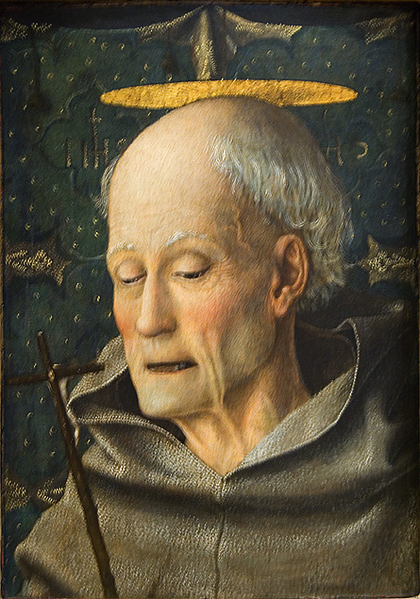
Saint Sebastian - patron saint of homosexuals

It was while researching the subject of sexual crime for my upcoming novel, The Mascherari, that I came across a period of repression that swept Late Medieval / Early Renaissance Italy.  This relatively unknown wave of persecutions and executions took place in 15th century Florence but also to a lesser extent in Venice. This phenomenon, which targeted men of homosexual disposition was known as la grande paura, The Great Fear.

To put this Great Fear in context, consider that during the period 1432 to 1502 in Florence, it has been estimated that as many as 17000 individuals were incriminated at least once for sodomy with 3000 convicted.  This is no small figure for a city with a then population of less than 50000.

The Great Fear took place at a time when Florence lay vulnerable following a number of repeated plague attacks. The Black Death of 1348 had swept away as many as 80000 Florentines in a population that was then 120000.  Serious plague outbreaks followed in 1363, 1364 and later in 1417, 1423/1424 and 1430.  In 1410, the population fell to its lowest, probably sparking fears about population numbers, and further consolidating any non-procreative sexual acts as threats to the city’s dwindling numbers.

But the rise in prosecutions can be attributed to more than just dwindling population numbers. In short, the Great Fear was fear of God's wrath.

Sodomy in Late Medieval Italy

In medieval parlance, sodomy was a broad term which for the Church, encompassed not only anal sex practices, but also masturbation, and any form of sexual activity – fellatio being an example – which did not lead to procreation.

In the 14th and 15th century, medieval Italy was no stranger to heterosexual anal sex. This practice was performed consciously between couples to avoid pregnancy.  For this reason, it was frowned upon by the Catholic Church for whom the sole purpose of sex was procreation.

But more vile in the eyes of the Catholic Church, was the sodomy inherent in homosexuality. This “abominable sin” was greatly feared because it posed the threat of inviting divine wrath.  While the term sodomy denounced any sexual acts that were deemed, then, as contra natura, or “contrary to nature”, it was usually the conspicuous act between two men which came to mind most of the time when people spoke the word.

Florence – the Great Sodom

The city of Florence was once considered as the modern Sodom. For much of the 14th and 15th century, Florentines more than their other Italian counterparts, had a reputation for engaging in what was then termed as the game in the behind. Venice, too, saw a rise in same-sex liaisons in the 15th century but this surge was thought to have sprung from Florence.

The Spread of the Great Fear

The rising intolerance towards homosexuals can almost be likened to the recent modern intolerance that took place in the late 1980s during which homosexuals were scapegoated for a raging and incurable disease which confounded physicians. Just as the spread of AIDs would focus the modern psyche on an “offending” subculture, so too did the scourge of bubonic plague experienced in the early 15th century bring about the scapegoating of homosexuals.


Bernardino di Siena

In the early 1420s, a particular religious preacher is notable for his spread of paranoia and his call to action against homosexuals. This man, Bernardino di Siena, preached at length in Siena and then later in Florence.

In short, Bernardino di Siena blamed sodomites for causing the plague. He believed that the plague was sent by God as punishment for the sins of sodomy. He also blamed population losses to sodomites’ apathy towards women, their reluctance to marry and their sterile sexual practices. “You don’t understand that this is the reason you have lost half your population over the last twenty-five years. Tuscany has the fewest people in any country in the world, solely on account of this vice,” he said.

In 1424, Bernardino di Siena launched a sermon in Florence during which he said, “For if they don’t marry they become sodomites. Make this a general rule: when you see a grown man in health who doesn’t have a wife, you can take this as an evil sign about him, especially if he hasn’t chosen for spiritual reasons to live in chastity.”  His remarks had a profound effect well into the later part of the century, in that most men of all ages who were later implicated in sodomy appear to have been unmarried.

While Bernardino can be applauded for denouncing such practices as the pimping of young boys by their fathers – often to procure themselves with privileges from the abducting party – or for warning parents about the potential dangers faced by their sons in a city where rape of boys was common, he nevertheless remains a disturbing figure for his stirring of hatred towards those men whose only crime was to favor other men.  In particular Bernardino painted sodomites as unstable, selfish and dangerous.  As explained earlier, he attributed anything that was unpredictable in the human experience – including the plague, wars and floods – to sodomy.

In his diatribes against what he called “feminised” men, he went as far as scolding mothers for dressing-up their sons to be too attractive.  He clearly suffered from an anxiety about gender distinctions. “They’re the beautiful color of hyacinth, these boys of yours become girls. Shame on you, fathers and mothers! [..] don’t send them out spruced up like maidens!” or even “Oh Silly, foolish woman, it appears you make your son look like yourself, so that to you he’s quite becoming: ‘Oh, isn’t he the handsome lad!’ and even ‘Isn’t he the pretty girl!’ “

His misogynistic beliefs also saw him advise mothers to lock up their sons indoors and only let out their daughters: he believed that even if their daughters were raped, it was “less evil” and therefore less offending to God then sodomy perpetrated on their sons.

Bernardino also accused Tuscans of being too lenient towards sodomites.  While in Florence, he praised examples of justice meted out to sodomites in other parts of Italy. He described how a man convicted of sodomy in Verona (then part of the Venice Republic) had been quartered and his limbs hung from the city gates; he noted that in both Genoa and Venice, sodomites were burnt.  In Venice, he taunted, they really applied justice.

In April 1424, as part of Lent, Bernardino gave a series of speeches against sodomy in which he called onto people to spit whenever they heard sodomy mentioned: “If they won’t change their ways otherwise, maybe they’ll change when they’re ridiculed. Spit hard!” On April 9, he roused the people by shouting, “To the fire! They are all sodomites! And you are in mortal sin if you try to help them!”

Prosecution prior to the Great Fear

While punishments against sodomy had previously existed in Florence, as Bernardino expounded, they were not as harsh as those in Venice.  The nature of the crime had long decided the conviction. For example, the rape of young boys or ‘giovanni’, was more severely punished than outright acts between two consenting male adults. The prosecution for a foreign man abusing local boys was even harsher.  Another consideration was whether the willing party was an ‘active’ or ‘passive’ partner, the ‘passive’ partner being usually fined. The amount of this fine rose with the boy’s age, reflecting a belief in the diminishing innocence of his act.  But for various social reason, it was often difficult to pursue certain individuals, and accusations did not often lead to punishment. To further cloud judicial matters, sodomy was well ingrained in every level of Florentine society including, no doubt, the higher levels of government.

Overall, prior to the 1430s, it appeared that sodomy did not attract much court attention.  According to Michael Rocke’s research of Florence judicial records dating from 1390 to 1410, only 33 persons were found convicted of cases involving sodomy, including 10 for attempting sodomy only. These cases dealt mostly on rape against young children. Very few individuals were condemned for consensual non-coercive relations. This was perhaps what Bernardino di Siena had termed as ‘lenient’.

The Signori di Notte’s Repression

In 1432, shortly after Bernardino’s inflamed sermons, the Florence regime finally appointed an institution, the Office of the Night, to “root out” sodomy.  This time, it was declared, there would be no lenience. The Office of the Night existed from 1432 to 1502 during which it administered a pervasive repression regime, targeting homosexuals.  In each year of the last four decades of the 15th century, an average of 400 people were implicated and 55 to 60 condemned for homosexual relations. Again this number is astounding considering the population at the time.

It was believed that the exercise of justice against sodomites would help appease God and prevent his wrath. Officials asserted that in such way, “the city and its upright citizens may be freed from all commotion, wars ended, plague abolished, enemy plots curbed” and so on.

The Officers of the Night operated through secret denunciations, calling onto the public to make accusations for which they did not require proof. As an incentive, accusers were offered financial rewards, calculated as a proportion of the convicted sodomite’s fine. Accusations were dropped in a box or tamburi affixed to churches in Florence and several nearby towns.  As would be expected, this system was not flawless. It was thought to lead to false accusations especially between enemies or between those still grieving old disputes.

The Night Officers also employed spies who ferreted out information and made their own accusations. Penalties ranged from various levels of fines to exile, interdiction from office, and at worst, execution.

Prosecutions in Venice

In Venice, the fear of sodomy was so great that the government body who took charge of prosecuting those suspected of homosexuality was no other than the same body of men entrusted with State security. This group of men, The Council of Ten, had enormous power which by 1430, equalled that of the Senate.

The so called Consiglio Dei Dieci were tasked with three main responsibilities: the peace and security of the Republic; the Venetian coinage; and the prevention of moral corruption, including sodomy.
In Venice, the punishment for sodomy was great, ranging from exile, maiming or burning.


As I found while researching for my novel, The Mascherari, the insidious powers of the Consiglio Dei Dieci often extended beyond the law and cannot be underestimated. The following case clearly exemplifies this idea.

In 1406 to 1407 a large group of homosexuals, including a number of young nobles and clergymen, were discovered by the Signori di Notte in Venice. Because the moral crime was serious and the penalty was burning, the Council of Ten stepped in.  However it was found that 16 or 17 Venetians from within the group were from the highest patrician families and so, the Council of Ten suppressed evidence and reduced the number of those executed to a minimum.

Still The Council of Ten made a concerted effort to “root out” the evil of sodomy.  For example, in 1455, it decreed that a certain number of places were to be placed under police surveillance since they were gathering places for sodomites. This included the porch of the Santa Maria Mater Domini church in the district of Santa Croce.

Again in 1460, the Council of Ten ordered physicians to send a report to the Council within 3 days after treating any man or woman whose anus had been damaged by sodomy…

But according to Rocke, the prosecutions seen in Florence far exceeded those in any other city on record, either in Italy or in Europe. In Venice for example, from 1426 to 1500, at a time roughly equivalent to the tenure of Florence’s Office of the Night, authorities prosecuted only 411 individuals and from 1406 to 1500, they convicted only 268.  In Genoa, only 5 persons were convicted from 1444 to 1500 while in Palermo, an estimated 100 men were executed for homosexual sodomy from 1567 to 1640.

Clearly the wave of repression experienced in Florence was unparalleled and remains a fascinating albeit disturbing subject of study.

Even more disturbing, at least for those who are more progressively minded, is that Bernardino di Siena, who actively preached against witchcraft and sodomy during the 15th century, is today a Catholic Saint.

___________________________________

A fantastic source of historical information for a subject that is given scant attention, Michael Rocke’s Forbidden Friendships – Homosexuality and Male Culture in Renaissance Florence was a valuable read for both my novel writing research and beyond. 


Tuesday, July 31, 2012

The Ming Storytellers - Sexuality


Issues of sexuality, sexual frustration and sexual obsession are an important undercurrent of the historical novel, The Ming Storytellers.

At the very core we have a world, the Forbidden City, where the only male population consists of an impotent emperor, Zhu Di, and his hundreds of castrates. Both ironically feel their inadequacies and both look to other worldly ambitions to compensate.

Zhu Di knows that he is unable to perform and in an attempt to dupe the world that he is still a virile man, continues to supplement his harem with yet more beauties from as far as Korea. Zhu Di persists in rubbing himself with aphrodisiac ointments and consulting with his physicians to improve his condition. Finding himself unable to perform, he assuages his masculinity on the military field.

Meanwhile the eunuchs who have sacrificed their manhood in order to accede to an imperial position understand that they will never have other means to succeed in their life than to serve their emperor. Maimed, conscious of their differences, plagued by lifelong health problems and sexually frustrated, they direct their ambitions, finding self-esteem and meaning in ascending the echelons of eunuchism, competing for roles and or often driving themselves to complex and illicit affairs with concubines.

For the hundreds of bored and sexually unfulfilled concubines in Zhu Di's harem, relief is found in forbidden literature. The women secretly indulge in the printed tales of the Ming storytellers, renown for their dubious virtue. They devour lascivious erotic vignettes, a Ming equivalent for pornography which arose during this period with the development of the printing industry.
In much the same way, Kareem, an envoy from Zanzibar is himself not foreign to the use of literature to compensate for the lack of spice in his bed. While his highly obsessed partner, Shahrzad, whiles her journey aboard the Ming fleet compiling theories about her idol, Admiral Zheng He, Kareem plunges ever deeply into the classic Persian volumes of One Thousand Tales (Arabian Nights).

Back in the Inner Palaces of the Middle Kingdom, bored and unfulfilled imperial concubines like the main protagonist, Min Li, become trapped in a form of fantasy, where they pine for unrequited forms of love. They become obsessed with eunuchs, perhaps men who believe themselves to be so inadequate that they shut themselves in a protective shell, convinced that they are undeserving of any adoration.

One such eunuch, Zhijian, will have to bear the frustration brought upon by castration all his life. He fills his time with the senseless completion of routine chores, without so much of a career goal, having abandoned all motive for life. The only escape from his torment is the obsession that he will develop for Min Li. His only joy following the castration that has deprived him of all he wanted from this life, is to seek every rumour concerning this one woman that he knows he can never have and who belongs to the emperor.
Zhijian will project his anima onto Min Li believing her to be pure and faultless, convinced that she is like him, a victim about to be slaughtered. Unable to function sexually, Zhijian elevates Min Li to muse status. He places her on a pedestal, relishing his platonic devotion as a welcome refuge because if he were to see her as a woman and desire her, he would ultimately need to face the 'villainy' of his physical condition.

But returning to the women of the palace, we find in the Ming Storytellers, another brand of sexual frustration one which perhaps would not be so problematic today, at least in many parts of the world.
It is the frustration of women who love other women and who are either forbidden to publicly meet due to social constraints or who entertain a secret passion for a loved one, a passion they hide, for fear of rejection.
The Ming dynasty is not foreign to sapphism. Palace women were known for having affairs with each other and wooden dildos have been found in the ruins of ancient Han palaces.

At the other extreme, there is another complex character who embodies a man completely at peace with castration yet who nevertheless suffers the frustration of remaining a man. Ji Feng is a eunuch, criminal at that. My conception of this character can be read in many ways. At the simplistic level he is a sexual criminal. At a more twisted level he is a man who has not 'come out' with his homosexuality. He experiences every woman as a threat, seeing them as creatures he can never compete with and whose form he can never hope to achieve.
Yet Ji Feng remains completely unaware of his own sexuality and of his seething jealously, nor is he conscious of his motivations for wanting to hurt women and see them under his power. Ji Feng's criminal impulse and his voyeurism, compound to produce a perverse individual capable of the worse crimes towards a gender that he cannot attain.

One salient undercurrent of The Ming Storytellers is the common theme of frustrated sexuality and soul-consuming sexual obsessions. It depicts a contrived world with extreme social taboos and physically maiming traditions, a world where eunuchism and forced concubinage combine to produce frustrated human needs that more or less contribute to the characters' journey.

Wednesday, June 6, 2012

The Secret Life of Ming Concubines

The alluring Gong Li in Tang Dynasty film,
 Curse of the Golden Flower

Nothing quite spells mystery like a glimpse into China’s forbidden palaces, centuries ago. Stepping back in time over 600 years ago, to the Ming Dynasty, one wonders about the women who dwelt in the palaces of Beijing and Nanjing. Unlike the daring women of the Tang Dynasty (618-907 AD) who lived in Chang'an Palace opulence and shied not from revealing skin or cleavage, Ming court women were more demure. 

During the early Ming Dynasty the dragon throne, seat of the emperor, lay in the palace in Nanjing, a cosmopolitan city then known as Yingtian. 


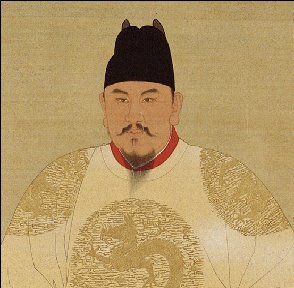
Emperor Hongwu - Zhu Yuanzhang
Founder of the Ming Dynasty

Emperor Hongwu, the first Ming emperor had just driven out the Mongols from the Middle Kingdom. Like many Chinese emperors before him, and much like the former Mongol rulers who had ruled China from Dadu (modern day Beijing), Emperor Hongwu owned a Royal Chamber or harem where lived, or so he hoped anyway, the most gorgeous creatures in the country and beyond. 

Who were these women? Where did they come from? Standards of beauty vary enormously between historical periods and cultures. What were the primary physical attributes that rendered a woman attractive in Ming China? And were these women happy? 

To answer these questions, we travel back in time to the Yingtian Palace. Here, in the Inner Palace, only the emperor, his eunuchs and the court ladies or maids can usually enter. But today for this exclusive interview with a Ming concubine, we have been permitted entry by a corrupt eunuch. We will sit under a pavilion in the Imperial Gardens and we will ask the delicate Zhou Mai, a fifth-ranking concubine, to tell us a little bit about herself, her beauty routine and what her experience has been so far living in the palace.

Greetings Zhou Mai. Where do you come from?
I was born in Korea. My country pays tribute to the Hongwu Emperor. This is a demonstration of my people's loyalty as vassals to the Middle Kingdom. In exchange, Korea is offered protection from pirates. It can also trade with the people of the Middle Kingdom. 

Is it true that you were sent to the Middle Kingdom as a gift?
Yes. Last year, the Hongwu emperor asked that my country pay tribute by sending him one hundred virgins. I was one of the girls chosen to be his concubine.

How old are you?
I am thirteen.

Did you want to be selected?
It is an honour to serve in Emperor Hongwu's Royal Chamber. But...I miss my family. My parents were very upset to see me go. 

Where do you live now?
I live here, in Yingtian palace. We girls sleep in the Royal Chamber quarters. We cannot go outside the palace. 

What is your palace title?
Here, I am called Zhou Guiren. Guiren is an honorific title for fifth-ranking concubines like me. I want to be a Guifei. This is a first-ranking concubine. I have much to learn. I can only become Guifei if the emperor is pleased with me or if I bear him a son.

What were the reasons you think you were selected? 
I was told my skin was as pure as jade and white as glistening snow. In the Middle Kingdom and Korea, fair skin is very important. Also my breasts are not too big as I have bound them tight from an early age with strips of cloth. Having big breasts is seen as salacious. I think also, I have a lithe waist and have always been encouraged to shuffle graciously with tiny steps. I am well-spoken and have a good voice.

I noticed that you do not have bound feet. Do not the women of the Middle Kingdom bind their feet?
We Koreans do not bind our feet.   
Yes, footbinding is increasing in the Middle Kingdom today.  It is called "lotus feet". 

So some women in the Middle Kingdom have bound feet and some do not?
The Mongols tried to outlaw the custom. They have since been pushed out, back to the North. Emperor Hongwu, is against all Mongol practices. Now footbinding is becoming popular again all over The Middle Kingdom. 
But there are still exceptions. Even Emperor Hongwu's consort, Empress Ma does not have bound feet. She is from Mongol stock.  She even rides horses.

Why do you think men of the Middle Kingdom like bound feet?
Any man with a good reputation prefers his woman to stay in the home so she cannot invite illicit affairs. A woman with bound feet cannot easily walk. So she is less likely to leave her husband if she wanted to. 
Also only country women who work outside in the fields need use of their big feet. So for a man to be seen as wealthy, it is best that his woman has lotus feet. 

Do you wish you had bound feet?
(frowns) Yes...and also...no. 

Why?
Lotus feet are seen by some women as more precious than a beautiful face. They say men are excited by lotus feet. They play games with them in bed. But then I know that lotus feet cause a lot of painIn the Royal Chamber, girls with bound feet need help to squat for toileting. They are dependent on their chamber maids. I often hear concubines complain about pain.

What do you do with your time, Zhou Guiren?
We do many things. We like to read books. They are not illicit tales from the streets, they are mostly virtuous books written by Empress Ma, Hongwu's consort. Also the educated ladies from Suzhou in the south come to visit us often. They are very talented. They teach us songs and music. They teach the younger girls to read.  I like to embroider animals on silk. I am getting better at silk embroidery. 

Do you go outside your chamber?
Yes, when it is not too hot. We ask the eunuchs to bring parasols for us and we play in the Inner Palace's gardens. We play behind the rocks and sing songs. But we cannot go outside the palace. On special occasions, some Guifeis will travel on sedan-chairs and accompany the emperor to visit the other palaces where the princesses and princes live. 

You mentioned illicit tales before. What are those?
They are road-side tales told by ambulant storytellers in the cities and the country. I am told they can be crude and not virtuous. Some tales have been made into bound books by the publishers of Fujian province in the south. But we are not permitted to read these. We are only allowed virtuous literature. Women should be modest, chaste and Tend to the Gentlemen. This is our highest calling.


Long silk pleated skirt, blue is usually a colour no commoner can wear
The ribbon tied coat is a little passe, Zhou Mai preferring buttons

What are you wearing Mai?
(stands) On my feet, I have slippers with peony pattern embroidery. I am wearing a long white silk pleated skirt. Pleated skirts are the latest fashion in the palace. On top of this, I have a silk peach waist coat with porcelain buttons. Buttons are very good to have. 
I like being a concubine because we have beautiful silk clothes. Country people can only afford cotton or hemp.

Did you do your hair yourself?
(smiles) My chamber maid helped me with this double bun. She picked blue flowers from the imperial garden and pinned them to the sides above my temples. One of the princesses gave me a gift of this cobalt tasseled pin and I have pushed it into my bun. This type of pin is only for girls who have reached menstruation. 


Ming Dynasty Hair ornaments 
Tasseled pins adorn double buns

Tell me more about your makeup and beauty routine, Mai.
It is important to keep the skin white and so we use powder from crushed shells. After covering my face in powder, I draw-in my eyebrows into black crescent shapes and spread a vermillion-tinged pomade on my cheeks to bring them to life. 
I use a vermilion lip balm to draw a cherry-shaped pout in the centre of my lips. It should not go out too much, only three quarters of the lip should be covered. 
On my nails, I have a red nail tint made of egg-whites, beeswax, balsamic dye and Arabic gum. Last month, my nails were tinted in black but I decided to change today. I wear a scented pouch around my waist to give off pleasant smells wherever I walk. (touches earrings) These jade earrings are a gift from the emperor. (smiles)
All this is what men find beautiful.


The cherry-shaped pout in latest vermilion


You mentioned eunuchs before, what are those?
They are men who have been castrated. They cannot have children. They are the only men we see in the palace aside from the emperor. 

What do you think of eunuchs?
Some are not to be trusted. But others are very helpful. It depends. They are from all over the country including the south in Yunnan province. Others come from as far as Annam, Korea and Manchuria. There are some eunuchs who never wanted to be eunuchs but they had no choice because they were made prisoner by the emperor's men and taken by force, like the Mongol eunuchs for example.

What is the role of eunuchs in the palace?
They work hard in the palace. They do everything for us. They bring toilet paper, empty chamber pots, call onto female physicians and they organise our foot warmers, parasols and sedan-chairs. They will bring us to the emperor's night chamber whenever we are selected to spend the night with him. They do everything in the palace but they cannot read.

Why can they not read?
(whispers) The Hongwu Emperor has forbidden that eunuchs learn how to read. He believes they should not be trusted with important documents. 

What about the Royal Chamber...do you girls trust the eunuchs?
(hesitates) Well...I will tell you something that the emperor does not know...yet. Some of the concubines have eunuch lovers. They meet them in secret... 

Why do you think the concubines seek a eunuch lover?
I don't know. Because...they are lonely maybe. They miss their family...but eunuchs are always here for them. Also some of the concubines can seek the attention of eunuchs when they are sad or lonely. You see, even if a concubine has children, these are taken away from them as soon as they are born and sent to the nursery in the Eastern side of the palace. 

Do you think you will ever return to your homeland?
Maybe. I think it is not likely. When concubines are old, around thirty years, they are sent to do laundry or become maids. They also cannot remarry with a man from the Middle Kingdom, only with a foreigner. Maybe I will die an old maid. But I am still lucky. I could be on a farm working hard on the land with not much food to eat. The emperor knows everything about famines. You see, when he was a young boy he lost most of his family in the Anhui famine. (smiles) So I am lucky living here in the palace.

Thank you, honourable Mai Guiren, for your time. It has been a pleasure. 
May the path you walk on be sprinkled with the most fragrant flower blossoms and may you live a long life.

An erotic embossment on a brick - Ming Dynasty (1368-1644)
Courtesy of the Chinese Sex Museum in Xi'an
Published in AvaxNews.com

Did you like this post? 
A new historical novel, The Ming Storytellers crafts a mysterious tale of imperial concubines and eunuchs set against the political intrigue and obsessions lurking in the palaces of Beijing and Nanjing. Set in the early Ming Dynasty, The Ming Storytellers brings to the fore the lives of imperial concubines during this period. It is available internationally from Amazon (Paperback and Kindle Editions), Barnes & Noble NOOK and Apple's iBookstore.