I was born in Dakar, Senegal where I lived at least 7 years of my life in an apartment, on Avenue Jean-Jaurès, with my parents and grandparents. You can see it here. It is a noisy and busy street with relatively tall buildings. Here, building constructions seem to linger on for years. I remember that as a four year old, I would be frightened of the pounding at construction sites, which I called " le Tam Tam".
"Tam Tam" is actually the name of a traditional Senegalese drum whose sound is wonderful, but that was my way of describing the noise which, as an introvert, I already found difficult to live with.
Avenue Jean Jaurès was relatively safe, and on Sundays, from the age of six onwards, my sister and I would walk together to church all the way to the Cathedral of Notre Dame.
Cathedral of Notre Dame
Shopping in Dakar was completed by our maids who spoke Wolof and knew where to find everything and how to bargain in the markets. We usually ate plenty of fish.
a market in Dakar where supermarkets did not exist
On weekends, we would regularly drive to the Pointe des Almadies and visit the resort there where I learned to swim, and where I would invariably pretend to be a little mermaid.
Hotel des Almadies - the pool was my Sunday joy
Our apartment was simple and functional with four bedrooms and two bathrooms for six-seven people, yet as expats, we were living in luxury compared to the majority of Dakar's slum dwellers. On my way to school, I saw signs of poverty everywhere, including limbless children getting around in wooden wheeled carts. But I never once stepped inside a slum, or what the locals would call, bidonville. I regret that now.
Bidonville in Dakar
Senegal is a poor country and my parents tried to shelter me from the cruel realities of life as much as they could. I remember that one day, I must have been about five years old, my dad was driving us to the coast, and we took a different route. I did not know it, but we were heading towards a slum district. We drove past what to me resembled large cardboard boxes and masses of greyish houses stacked so near together, that one could not even see what lay inside this maze.
I asked my Dad where we were, and what we were doing here. I was absorbed by this alien place, a place so unlike the palm lined resorts, so unlike the pleasant breezy Corniche on the coast. I could have never suspected that this ugly place was home for most of Dakar's inhabitants.
My mum told me to sit still but I hassled her with questions. My parents replied that people lived here, that this was their home. I remember that my jaw literally dropped and I entered a state of denial. I was persuaded that my parents were lying to me, telling me things, only to keep me quiet.
"That's not their home. How can they live in cardboard?" I asked. It was a notion I found so horrifying and unpractical that I was convinced that it must be a lie.
My Dad parked the car and stepped out. He said he had to meet someone and pay him. So I waited with my mum and sister, looking on with anxiety as my Dad stepped to the edge of the bidonville and disappeared behind a grey wall. I thought he must be playing a prank on me and was merely pretending to go and see someone, given that nobody in their right mind could live here.
I know that on that day, a truth had awakened in me, even though I buried it deep and tried not to look upon it.
What I had called, 'cardboard', was in fact flimsy building material but it seemed like the right thing to call this brown material at my age. I had not even acquired the vocabulary for describing what I saw.
Dakar had the power, very early on in my life, to make me see the world. Really see it. It is a gift that I cherish. Because the majority of those who live in wealthy countries, just as I do now, have no conception of what the world looks like and, often, I think it hardens them. It would be a jaw-dropping experience for them to understand that just as the majority in Dakar lives in slums, the majority of the world's population survives on nothing. Almost one billion people in the world (one seventh) live in urban slums. In India, the world's second most populous country, people are more likely to have a mobile phone than access to a toilet with 50% of people still defecating in the open.
As writers - artists, often we are let loose; we become searchers; we seek, swept on an endless trail of letters, ideas, music and images.
We hunger for more, enraptured by our quest; we seem to find ourselves, again and again, within the subtle interconnections between what we have loved, what we love, and what we grow to love.
The memory of what we have loved is re-ignited with every new discovery that we make, and there is enlightenment in this reunion with our nature.
But later we find, that our nature is not our own. Because by some unexplained happenstance, we flit back, we return, time and time again, to those who have inspired us, and there, through some subconscious force, we are awakened by them. By their side, we come to create.
In this pattern, the face of our obsessions slowly surfaces, and with it, the ties that bind us to those who have made us, come to be revealed. It becomes evident that in this web, this collective consciousness, we have a place; snug, we fit. And those we look up to, are close, much closer than we could ever imagine.
Do you often experience this? As a writer? When all the stories, ideas, artwork, cinema or music that you have loved, and whose essence have shaped you, are somehow woven by the same thread. That everything you admire or that fascinates you, is related; magically. That the more you look into these, the more you see that those obsessions are tightly bound. That they have, not just one, not two, but numerous links between them, and that when all those inspirations are laid out, that you fit, in there, at the very center.
When you discover this center, you are surprised to discover that it is not yours alone. Your origin, those individuals whose art has imbued your psyche - you commune with them. They are there, by your side.
As a child, how I loved Jacques Prévert's and Paul Grimault's Le Roi et L'Oiseau. This 1980 French animation sets Hans Christian Andersen's The Shepherdess and the Chimney Sweep within a dystopian kingdom, ruled by a narcissistic despot.
It is the story of two fated lovers, who must try to save their relationship from the tyranny of a king enamored of the shepherdess. The surreal intrigue is compounded by the fact that it is the king's portrait who, having emerged from his own canvas and sent the real king to the dungeons, sets off a ruthless chase for the Shepherdess and the Chimney Sweep.
With the help of my favorite character, L'Oiseau - a gregarious and anti-authoritarian mockingbird who protects them at every turn - the couple flee through the canal city, a world reminiscent of a sci-fi Venice, where they are chased by a black-clad, sbirri-like secret police.
This animation, which borders between lyricism and social satire, was the joy of my childhood. It is deep, with levels that I am still discovering. Its imagery often evokes Salvador Dali landscapes, where unbearable emptiness stretches across intricate details of spires, bell towers, endless steps and mechanical contraptions, stirring with it, paranoia and anxiety. To think that Salvador Dali has been my favorite artist since my mid teens.
There is much to like about this surrealistic masterpiece of French cinema. As an aside, my favorite scene takes place in a cell where the Chimney Sweep has been imprisoned by the King's men, and is about to be devoured by a pack of lions. Seeing this, the mockingbird urges his fellow cell mate, a blind musician, born in an underground subculture and who has never seen the sun, to play a happy tune with his accordion so as to distract the lions. And so the music plays on.
But the mockingbird, a master storyteller, and fluent in several languages (including "Lion"!) has a plan. As part of the 'entertainment', and still accompanied by the happy ballad of the blind accordion player, the mockingbird begins to recount the poor Chimney Sweep's tragic love story to the hungry felines. Together with sound effects, and heightened pathos, the bird tailors the story to match the lions' interests, until the beasts' indignation towards the King reaches a climax. They force open the cage and free all the prisoners, before marching towards the tyrant.
That's the Bird. Protector and Catalyst...
But the real jewel of Le Roi et L'Oiseau, and the soul of this post, is the astounding soundtrack, by Polish composer, Wojciech Kilar. His wonderful music is in my bones. It is part of me, just as Le Roi et L'Oiseau has seeped deep into my psyche.
Wojciech Kilar returns again, later in my life, as the composer for Francis Ford Coppola's Bram Stoker's Dracula (1992) and later, he brings his dark arts to Roman Polanski's The Ninth Gate (2000).
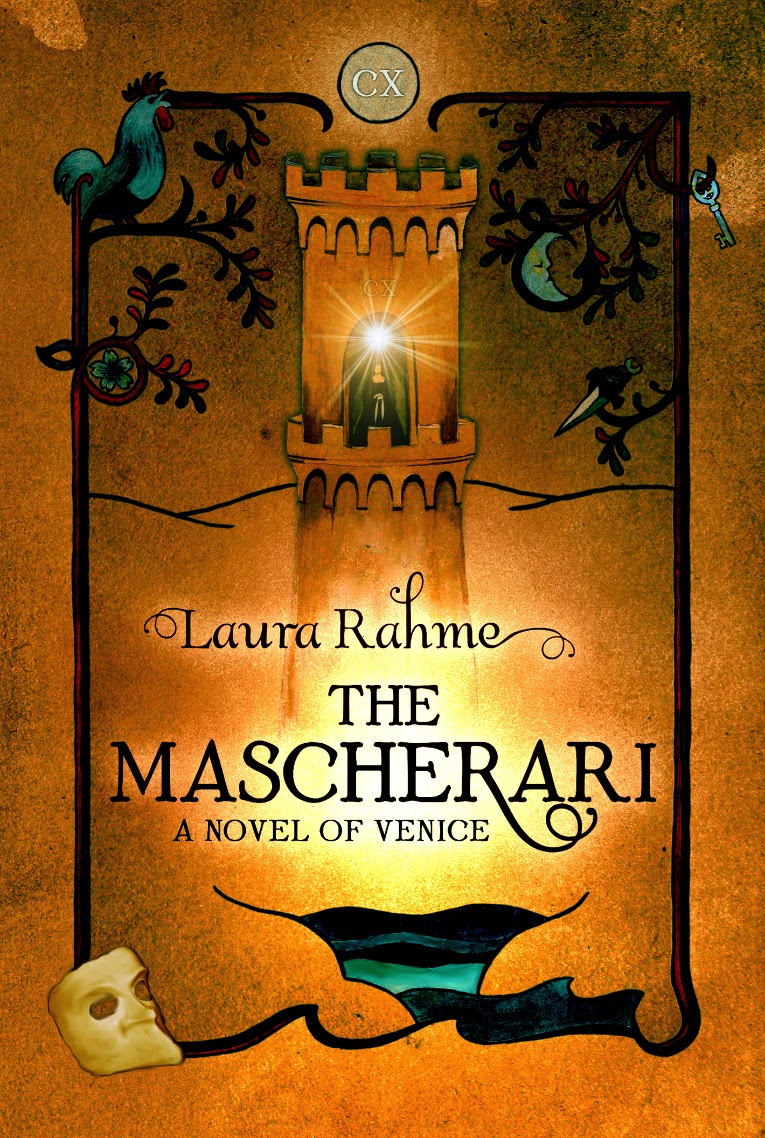
The Ninth Gate, a film based on the novel adaption of The Club Dumas, has been a vivid inspiration for my upcoming novel, The Mascherari. I remember watching the film and feeling irrevocably drawn to it, believing that I had always known it. It's a strange feeling that one. Then again, perhaps it is Kilar's music which holds the key to my memory.
Reflecting on The Mascherari, if I were to look into the face of Venice, in the manner I have drawn it, with The Council of Ten's shadow looming over my protagonist, with its secret police- its sbirri, at every turn, I come face to face with the menace I remember in Le Roi et L'Oiseau. In my creation, I return to what I have known, and through this, I remember that Wojciech Kilar's haunting notes are never far.
Thank you Mr Kilar, for the music and for the inspiration.
Wojciech Kilar died in 29 December 2013. But his music lives on.
I was born and raised a Roman Catholic, and in my teens, I attended a private Catholic school which had as its patron saint, a renown inquisitor of the name, Saint Dominic.
My school was not too strict but I do remember an incident that had me reconsider. You must know that as a teenager, I was quite fond of reading out Tarot cards.
Ok, let's just let it all hang out, once and for all. I was, in fact, ruthlessly pagan. I practiced anything, from graphology, palmistry, tarot card readings to astrology and numerology. We didn't have the internet in those days - that is, no online apps that could automatically spit out charts upon entry of a birth date and time - I had to contend with a planetary almanac and my calculator, so that I could use my formidable mathematics skills (I did, in fact, top maths in my school) in order to map out my friends' and family members' astrological charts.
So that was me, outside school and homework. Wicked.
My Tarot 'self ' for my many Tarot readings.
And then The incident happened. One day, I was sitting with a couple of friends, in a dark corner of the school library. I began to lay out my Tarot cards (I had a Marseille pack) and to read out what I could of my friends' fortunes. Little did I know that the librarian had spotted me. She at once began to scream and shoo me out of the library, telling me that I was a wicked girl, and that these cards were against the Christian religion, and that I was SINNING. Bla bla bla.
That was in 1991.
I can only let you imagine the illumination I felt later, at the age of 20, when I devoured Zoe Oldenbourg's magnificent, Massacre at Montségur, and came face to face with the injustice of the Cathar persecution, including, at the hands of Saint Dominic himself.
It seems, that during my school years, I had sided with the wrong guy by association, and I did not even know it! The tragedy...
Dominic (with a halo) and other Cistercian abbots
crush helpless Cathars underfoot. As you do.
Sometimes things just click into place.
Writing my second novel, The Mascherari was immensely pleasurable. It was my opportunity to dive fearlessly into pursuits that have always been second nature to me, without guilt, without shame. The Mascherari is a historical novel set in 1422 Venice. It takes place between the Winter Solstice and La Befana.
While most of the research was historical, and had me delve into all aspects of Venetian society during the early 15th century, a certain component of the research covered esoteric subjects - like Tarot reading, the phases of the moon, Italian Stregheria, magical amulets, and even old Roman cults.
Today, I am pleased to announce that The Mascherari will be released on 13 August 2014, to coincide with International Left Handers Day.
I chose this date for several reasons.
In ancient and medieval times, in many parts of the world, left-handed people were traditionally associated with witchcraft and an evil nature. The Catholic Church itself declared that left-handers were servants of the devil. Such people would be sent to the bonfire. As it turns out, Joan of Arc’s supposed left-handedness was one of the justifications (among a few) that were employed to brand her a witch, until she was burnt at the stake.
In Italian, the word for left is 'sinistra', while in Latin, the word for Left-handed is 'sinestra'. Both words provide the root for our modern word, 'sinister', and I certainly hope my readers will enjoy a little of the sinister in The Mascherari.
13 August is perfect for another reason.
Not only is The Mascherari's author left-handed (and possibly a witch!) but 13 August, long before being declared International Left Handers Day in 1976, also happened to be, for centuries, the Feast Day of the Goddess Diana.
Just think. Diana is the Queen of all witches.
I wonder if the individuals who settled on 13 August as Left Handers Day were perfectly aware of the significance of this date when they chose it. I have often speculated on whether their act was a perverted endorsement of the age old accusations of witchcraft laid upon left-handed people. "Yes, actually, we are all witches. You were right all along."
As a person with an INFJ personality profile, I have always been a sensitive creature.
I remember in Dakar, when I was six, my sister's friend, Sandra Ghaffari, had invited us both to her birthday party. We played many games. And during one such game, the birthday girl gave each participant a folded piece of paper where she had written down her 'secret' thoughts about that person.
When it came to my turn to receive a note, I unfolded it in anticipation, only to be mortified. While my sister had the honor of reading, "You are my best friend", or something of that nature, I received the incredibly cruel, "You are a rotten banana".
Don't laugh. In French, it translates to, "Banane pourrie!"
My poor little ego was battered. All along, I had thought that Sandra had invited me to her birthday party because she liked me. How wrong I was! It seemed, that in her eyes, I had only tagged along as the annoying little sister. I remember leaving the circle, deeply hurt, and crying in my corner. I later confided in my sister that Sandra had been mean to me.
From then on, Sandra Ghaffari became my number one enemy. Oh, yes! As an INFJ, I certainly have a blacklist. (It did not help that I was possessive of my sister - you probably guessed that.)
And yes, Sandra Ghaffari was the girl's real name. Oops. You know what they say about writers? Don't piss them off. Ha!
But seriously, there have been moments in my life where rejection, or the perception of being rejected, has been incredibly painful. I think I wrote of it in a couple of blog posts, including this one, and of course, this one.
Tying into rejection, is the problem of perception. And ultimately, of image.
Like many women, image has been a problem for me. From the time I wore braces for almost three years, to the long period where I developed anorexia, image has baffled and tormented me with the question of,
How to be physically who I am inside?
I know, now, that to be physically who-you-are-inside is impossible. It doesn't matter what you try, you will fail.
Image, I now see as either hard work,supreme art, physical effort, or incidental - but never a true representative of a person. At this point in my life, I play with artifice, because I enjoy it and because I am fortunate to be able to afford it. I love clothes, costume and beauty in all forms, just as I am fully conscious of their limits. For example, I would much rather read someone's words to learn of who they are, than look at them. In the same manner, I would rather someone read me to get to know who I am.
This is something that most people do not understand - that what I write, is very much closer to who I am than the visible ever will be. The visible is completely fabricated.
I learnt something about myself recently. I was not even reading a self-help book or anything too deep. I learnt of it through one of those model contest shows.
No kidding.
I forgot the name of the show. I'm not loyal to television in general and I tend to skim lightly through shows at random. Anyway, one of the modeling contestants was receiving feedback about her photo shoot. The judge observed her photos for a moment, and then he asked if she had at all been bullied or put down often during her childhood. She confirmed that she had. At this, the judge, who also happened to be a male model, explained that he could read this through the attitude she carried with her in each photo. In other words, her attitude was a defense reaction to the intruding eye of the camera.
His words really resonated with me. I began to understand, why, it is in fact rare, for me to even smile naturally in a photo shoot. There is always the default attitude, that tendency to hide behind a mask and to play the role of someone else - someone stronger, elusive or aloof - and to not let anyone in. I think this attitude is also part of my very private (and sensitive) personality.
Many would agree that a camera is a contraption that has the potential of making its subject feel vulnerable. It is why so many people run away from the camera. They hate the camera's intrusion and its false 'revelation'. They understand, deep inside, that one's image is limiting and that cameras can enforce a narrative that one might not want. And so, when the lens is on you, judging you, which really, is akin to any social situation where one might end up feeling small or inadequate, it carries with it an element of choice - do you allow it to make you feel vulnerable, or do you remain out of reach so that nothing can harm you. I think that is essentially the difference between a direct, warm smile to the camera and an attitude.
As an author who understands the need to market and to have an online presence, together with photos, the prospect of vulnerability and criticism becomes very real. At the same time, there comes the opportunity to create a narrative or to play with artful imagery - a wonderful process that mirrors writing.
To slip in and out of a role and create a character - I love that thrill.
Do you often meet people who defy categorization? Those whose interests and talents are so varied that they baffle the mind? Most humans are so fond of classifying one another that they often find it strange, and even stupefying, when one of them seems to excel at a multitude of disciplines.
In some circles, we jokingly label these people, freaks. A more sober qualification might be, 'polymath'. If they reach world renown and professional recognition, we label them geniuses.
You may be familiar with What's My Line, in which contestants are blind folded and have to arrive at the identity of a guest after this one answers a series of questions about their abilities and achievements. In one particular episode, the contestants were confronted with a most puzzling personality to identify.
For each discipline in which the personality was asked if they had achieved, the response was affirmative. The contestants grew increasingly more confused given their inability to easily associate the guest with a unique dimension of excellence.
"Is there anything this man has not done?" cried one of them, in gentle exasperation.
The personality of course, is Salvador Dali.
Is Dali the only personality with such multi-faceted talents? I do not believe so. I think the majority of individuals are capable of tremendous range, if and only if, they do not limit themselves cognitively into believing that they have found their niche. Self-categorization, or rather, the lack of, is in fact, what I believe is a defining factor of geniuses.
[Self-promotion alert] While writing my novel, The Mascherari, I have been on a glorious trip to 15th century Venice. I want to bring attention to one of the geniuses I met there. Given the gender biases of the time, the terminology for describing these 'geniuses' revolves around men. And as the title of this post indicates, these multi-disciplinary freaks were then called, Renaissance Men.
There is something elegant and uplifting about being called a Renaissance Man, especially when one happens to be extremely handsome to boot. Leone Battista Alberti was one handsome man, as you can see from this statue of him located in Florence.
He was born Battista Alberti. Later, he changed his name to "Leone". I ought to mention his birth date, 14 February 1404. Advocates of astrology will have probably noticed that Alberti was an Aquarian.
Hold that thought.
Fans of Leonardo da Vinci will also note that Alberti was several years da Vinci's senior. In fact, he is the bona fide early Renaissance Man, and was equaled to none, except da Vinci.
I believe that geniuses have a cognitive advantage. I do not mean that exclusively in the neurological sense. Their primary advantage is that they have an inherent belief that they can do anything if they set their minds to it. As it turns out, Alberti is credited with the following empowering quote,
"A man can do all things if he but wills them."
So why is this guy so special anyway?
Alberti was known as the prototype of a 'universal man'. His breadth of knowledge is truly remarkable. He was at ease in the fields of philosophy, mathematics, science, classical learning, and the arts. He wrote pamphlets or treatises on ethics, love, religion, sociology, law, mathematics, and different branches of the natural sciences. He also wrote verses which demonstrated his aptitude for the Classics. In the arts, he was versed in painting, sculpture, and architecture.
Painting
Alberti could paint and was a good artist however none of his paintings unfortunately survive. Classical and Law education
Alberti, or should I say, Dr Alberti, was educated at the University of Bologna, where at the age of 24, he acquired a Doctorate in Canon law. Writing
It is said that writings poured out of Alberti, in both Latin and the Vernacular languages of Italy. Alberti scripted and wrote many love poems, fables, Latin comedy and dialogues. He wrote treatises on sculpture, agriculture, law and a host of technical subjects.
He once wrote a ten-book treatise on the technical nature of how a city should be structured (Brisbane, take note). He detailed how water should be properly channeled, how work sites should be constructed, the types of materials to be used and the different kinds of buildings that should be positioned in suitable and ideal locations.
Sounds boring? Wait, there's more.
In 1435, Alberti wrote what is known as the first book on perspective. His book, De Pictura (On Painting), sets out rules for drawing a three-dimensional picture on a two-dimensional surface. Basing himself on the principles of perspective that had been demonstrated by Filippo Brunelleschi, Leon Battista Alberti produced a book that would later guide dozens of Renaissance artists in the creation of more realistic, perspectival artwork. Music
Alberti composed music and was a reputed organist. Astronomy, Cartography and Geography
Alberti produced a treatise on geography that laid out the rules for surveying and mapping a land area. The instruments and methods he described pre-dated later geographical depictions of the 15th and 16th centuries which are noted for their advances in accuracy. Architecture
Despite having had no formal architectural education, Leon Battista Alberti was known as the Father of Modern Architecture. He was the principal initiator of Renaissance art theory.
Among his work, he completed the Pitti Palace, the Temple of Malatesta at Rimini and the Church of Sant’ Andrea. Before its later renovation, Alberti was commissioned to design the first Trevi Fountain in Rome.
Since I am particularly clueless in Music and Architecture, none of this excites me as much as what follows.
Cryptology and Mathematics
Remember - I mentioned that Alberti was an Aquarian, and Aquarians are traditionally known for their cutting-edge, technical minds. Given Alberti's impressive portfolio in various technical fields, it should be readily evident that, for once, astrology seems uncannily spot on in describing its subject.
But it is in the field of cryptology that Alberti truly shines as an Aquarian specimen. Here, we find the summit of his technical mastery and visionary mind. In our modern information technology age, we take for granted that technology can obfuscate our messages and encrypt our passwords, without paying so much attention to it. Consider, then, that long before the advent of computers, Alberti developed a type of cipher to which most of today’s systems of cryptography belong, and which is known as polyalphabetic substitution. It was called the Alberti cipher.
It turns out that Alberti is known today as the Father of Western Cryptology.
Brains are sexy. But men with secrets, even more so!
Secrets of the Vatican
Alberti had, since his twenties, been appointed to an ecclesiastic post and worked many years for the Vatican. One of his friends was pontifical secretary, Leonardo Dato. It has long been believed that it was Dato who spurred Alberti’s interest in cryptology. At the time, both the Vatican and the Venice Republic were dabblers in secret communication inasmuch as they also engaged in intercepting and deciphering foreign messages. Decipherers were employed both in the Vatican and in the Venice Republic - two cities which incidentally hold impressive archives (the Vatican has the largest archive in the Western world and Venice is not far behind.)
According to cryptology historian, David Kahn, Alberti was strolling in the Vatican gardens with Dato (what on earth were they doing), when this one asked him, “You’ve always been interested in these secrets of nature. What do you think of these decipherers? Have you tried your hand at it as much as you know how to?”
Alberti smiled. Alberti already knew that Dato’s duties included ciphers, yet he replied as though he ignored it, “You’re the head of the papal secretariat. Could it be that you had to use these things a few times in matters of great importance to His Holiness?”
“That’s why I brought it up,” replied Dato. “And because of the post I have, I want to be able to do it myself without having to use outside interpreters. For when they bring me letters in ciphers interpreted by spies, it’s no joking matter. So please – if you’ve thought up any new ideas having to do with this business, tell me about them.”
And this exchange is supposedly what enticed Alberti to deliver a cipher treatise around the age of 63. Think of it as an off-the-shelf cipher tool complete with a set of revolving discs which Signore Dato could play with to his heart's content.
New - Alberti Gadget
Ta da! Just like that, out of the blue. Unless...
Genius in the Making
What struck me about Alberti’s conversation with Dato, is that our Renaissance man already knew of Dato’s ciphering activities long before Dato admitted to them. To me, this awareness hints to Alberti’s inherent interest in matters of ciphering (just hanging around the Vatican would do that to you, I reckon). Alberti’s attraction to solving problems, and to mathematics in general, arose long before he ever knew Dato, back when he was a twenty year old law student. In those days, he used to find mathematics relaxing and even mentioned that it was a welcome break from studying law, which he said, taxed his memory.
Merging these ideas together, and working on the premise that one’s great work later in life often sprouts from seeds sown when one is much younger, I speculated at length on Leone Battista Alberti’s early life.
The Lost Years
Leone Battista Alberti appears briefly in my novel, The Mascherari. I wanted to pay homage to a man who, while born a wealthy banker’s son (the Alberti bank was known in the 14th century as greatly contributing to Florence’s wealth), flatly refused to work in banking, and focused instead on contributing to humanity in various fields. I also wanted to speculate on a challenging period in his life - a period where he lost his father, lost his inheritance to his uncle, and suffered illness even while studying.
What did Alberti do to survive during this time? The Mascherari is set in 1422, at a time when Alberti was only 18 years old. That may seem young, but it did not stop me from advancing some bold theories about our 'universal' err, young man...
After all, with a genius of his caliber, anything may have been possible.
Aquarians and other geeks can delve into David Kahn's The Codebreakers: The Comprehensive History of Secret Communication.