Showing posts with label The Ming Storytellers. Show all posts

Friday, February 4, 2022

Using Canva to create my book trailers


I had worked with the brilliant tool Canva since 2017, albeit in a professional setting where I was more a passive recipient of mockups lovingly realised by UX designers at my workplace.

After releasing The Secret of Chantilly in late November, then participating in the book’s promotion activities in December and surviving all the Christmas cooking, I decided I needed a purely visual and auditory project. I took on playing with Canva and was pleasantly surprised. What began as social media posters (that I deleted) and fun food menus themed around Christmas and High Tea, soon led to a joyful passion for book trailers. 

I completed two book trailers in late January after upgrading to Canva Pro. One for Calista and one for The Ming Storytellers. I also had loads of fun with a Secret of Chantilly promo to coincide with Talleyrand’s birthday. I’ll eventually work on a trailer for my other books. 

My favorite part of the process was choosing imagery that evoked themes and symbols in my stories — a very rewarding semiotic exercise —  then applying various royalty free sound pieces to set the mood. I also had to avoid modern imagery as my novels are set in the past, and choose video content over photos where possible to avoid that “presentation slide” feel which is not what I wanted.  For the sound in the Calista trailer, I added thunderstorm, ocean and cricket effects and had fun with jarring and downright spooky horror pieces. The addition of sound made me realise just how crucial to the emotional effect sound mixing is and my respect for that discipline of filmmaking has increased like never before. The result is an unsettling little video that captures the contrast in Calista’s life before and after moving to England and creates intrigue. It won’t win an Oscar but I’m very happy. :)

For the Chantilly promo video, my aim was not to convey what the book is about but rather to showcase the essence of my characters : nimble, hardworking chef Carême affairing himself in the Château de Valençay kitchen, and his tasteful and regal master, Talleyrand. All the Valençay photos are my own, taken during a trip to Indre in July 2020 while I was editing the French version of the novel. I also used music that would have been familiar to Talleyrand in his time, so the first piece for example which accompanies Carême’s cooking, is by Mozart, and it worked wonders when I adjusted the pace of the imagery and used lots of dynamics like confetti, butterfly wings, and hand gestures. The cartoonish imagery is befitting because the novel possesses  a fairytale like quality, and these childish finishes also add an element of fun to what is, after all, a birthday celebration video. 


The Ming Storytellers book trailer is my greatest joy. It has by far the prettiest music, a melody that wonderfully tugs at the heartstrings while spelling mystery and awe. I remember sighing wishfully years ago, telling myself that I needed a book trailer for my epic story, but I never had the time nor the resources for it, and now, ten years after its release, it finally has one! Thank you Canva!  


Thursday, December 19, 2013

What I Learned From Publishing My First Novel


Readers are your best friends 

Yes, they are. Think about it, you are an unknown writer. It takes either love, a keen interest in the author, a commitment to helping other authors, openness, or else a genuine attraction to a book's premise and setting to dare read a novel from an unknown writer.

In the last eighteen months, I have been blessed with friends, some strangers, who have supported me in this, the beginning of a long journey, by simply daring to pick up my novel and enter an unknown world.

The number one factor in influencing book purchases is what psychologists call normative influence: a recommendation by a friend. This is why, having someone read your novel and enjoy it can be a catalyst for a chain reaction of events that defeats any form of marketing. Its value is priceless. Without the support of a massive marketing campaign to increase the author's visibility, or impress value in a potential audience's mind, the only real promotion a new author is left with is the reader.

So thank you to my readers. You rock!

Your cover needs to attract the right audience

Would-be readers who discover they chose the wrong book based on personal taste can be your worse enemy. I have received reviews that made me wonder, "well, what did you expect?" and again, some have made me think, "isn't it obvious that it would be THAT kind of book?"

Well no. Perhaps it was not that obvious.

As a self-published author, I take on the responsibility to properly promote the book so as to target the right audience.

How do you ensure you are attracting the correct audience?

The Ming Storytellers has an undoubtedly beautiful cover. Last November, it won a eBook cover design award and designer, Caryn Gillespie, will soon produce the cover for my second novel.
According to studies, aside from a friend recommendation, the cover is one of the most important factors in luring a reader to purchase a book.

So what went wrong?

I think the nature of The Ming Storytellers, with its multiple character points of view, its multiple narrative threads and its balanced set of male and female characters, would definitely seem 'boring' or 'too long' or 'confusing' for those readers who were inticed by the splendid Chinese female on the cover, and who imagined the novel might be set exclusively in the feminine sphere with a single point of view.

It could be argued- and I am doing so intuitively without any quantitative evidence- that the plurality of The Ming Storytellers may have been more strongly conveyed if the focus of the cover had not been on just one character. Truer still,  the 'epic' nature of the novel (to repeat the term used by many readers) would have been emphasized if the cover emulated the imagery in traditional epic novel covers...which ultimately are sort of boring anyway. Or less sexy!

I would not change this cover for the world. But I think in this case, the blurb of the book may require rethinking. It might be rewritten to better convey the important facets of this novel to a reader who may otherwise be misled by the imagery.  

Giving away your book for free is not always a good idea

I think giving away your book for free has advantages, the main one being to increase an author's visibility over a couple of days. However the volume of downloads does not convert as expected.

Sure, you'll generate thousands of downloads in a few days, but how many of those ebook hoarders are genuinely interested in immersing themselves in a 600-page novel set in the Ming Dynasty? With eunuch male characters? And with foreign names? Very few.

They will like the cover (and who doesn't), add the ebook to their shelves, increment the number of books in their social reading platform and, ta da - end of story.  I've had a sinking feeling whenever I have seen my book tagged in Goodreads as "freebie" or "free ebook". It likens my 'omnibus' (as described by a wonderful reader from India) to the worse junk that exists in the digital self-publishing world.

At worse, the impulsive hoarder's tastes will turn out to be horribly mismatched to your book.
And they will leave a review.
Just because they can.

And let's not mention the trolls - individuals who have produced nothing literary in their entire lives and whose sole sense of worth is derived from destroying an author's reputation by happily downgrading the said author's book ratings - at No cost! Do not indulge them.

Trolls exist. I thought they did not, but they do. I was naive.


Negative reviewers are poor psychologists

In life, you can choose to be happy and you will be... Or, you can choose to be miserable and that too, will be your lot. Your preconceived attitude will cloud your perceptions of others, your interpretations of events and, if that is not enough, it will horribly skew your sense of measures.

There are negative reviews that are genuine and humbling just as there are those that reveal deep seated issues in the reviewer. What remains perplexing about the latter is how they can feel so comfortable making certain judgments in public when the attitude behind their words is rendered so evident. I worry sometimes.

Nevertheless, considering the democratic nature of digital publishing's rating system, an author will always have to deal with the masses. And one does not need to be a psychologist or a historical novelist, to understand that the masses, often, are led by idiots.

If you publish to US audiences, don't be a freaking snob, use US English

I made the mistake of employing UK English for a full year with Amazon.com as my main distribution point, only to have a couple of reviewers rant about the spelling mistakes that were rampant. (This was simply not true.) Considering that the US is my primary market at the moment, I should have known better.

Living in Australia, where both spelling forms are known (or more or less known and accepted), I could not imagine how intolerant the majority of US readers are. The more educated would not complain but this was not the case for the majority.

In the end, I resolved the 'rampant spelling' problem. To be fair, I did identify 10 spelling errors that were genuine, but in a book of 600+ pages, I felt that the judgment made upon The Ming Storytellers as being 'obviously self-published' was grossly disproportional. My fellow indie authors will agree.

Again, reviewers are not the best psychologists. And they are not good at maths.

Your Best Reviewers are people who understand what you were setting out to do.

This encapsulates what I seek from reader feedback: to be understood. Not on the surface, not at the narrative level, but deeply and completely. When a reader has understood my meaning - not my words, but my intentions - I feel at home.

It gives such joy to strike a chord with a reader. It's like tapping into this collective essence that is humanity. When a reader shares their reaction and I deem it the 'correct' one based on what I sought out to do, there is this symbiosis, as though both our mirror neurons were activated in tandem.

Crazy analogy...
You must forgive the social psychologist in me. The writer in me would just say "fuck yeah".

For those moments, I am grateful.

I made mistakes

I take objective feedback seriously.

Some of this feedback related to the editing of The Ming Storytellers which might be slightly improved.
Yet further feedback related to the multiple voices within the narrative which jarred certain readers or rendered the novel more difficult to read for some. Then again, there were readers who enjoyed the novel's complexity and saw it as a challenge and a reward to complete.

All this, I take seriously.

According to the more objective feedback, The Ming Storytellers could have been slightly better edited...even though I spent a total of 6 years on it. It was not an easy task. Sure, I could do it again - revise the flow and complexity in certain passages, strip a couple of sentences, use alternative words... But I shall keep that lesson for the second novel which I can promise, as a self-improving author, will be of higher standard from an editing perspective. It will also be shorter.

As for plurality of voices- well, judging from George R.R. Martin's success, and his books' multiple points of view, I may not want to change my approach. I believe there are readers who enjoy multiple voices. I know I do. In fact it is what I most enjoyed in Wilkie Collins' The Woman in White. Perhaps I might best apply this feedback to attracting suitable audiences by injecting more thought into my future covers.

Self-doubt is here to stay

No matter how pompous or joyful my Tweets, no matter if I rave about a five-star review, no matter the thought that I'm now published, still, the self-doubt is here to stay.

My partner, who has been a writer for over twenty years, and is a respected screenwriter in Australia and abroad, has many a times advised me that self-doubt is the lot of writers. But not just all writers: those who care about growing and those who are not complacent about their art.

Based on this, I am grateful for self-doubt and the motivation that it imparts to me. I also know, through the enormous talent I see whenever I pick up a book by my favorite authors- some of who are my friends-, that I still have much to learn.


Tuesday, December 3, 2013

Win The Ming Storytellers for Christmas


Adrift from the Ming Dynasty to delve instead on Late Medieval/Early Renaissance Venice for my upcoming novel, The Mascherari. The jump between cultures is always fascinating. In contemplating two different worlds, one can't help but compare and contrast. 

Here is a short multiple choice quiz for anyone wishing to win a FREE paperback copy of The Ming Storytellers. I will be giving away two copies in January 2014!

Simply leave a comment with your answers to each question. (You can also comment on the Facebook post here). Each question is worth a point unless advised. Answers will be posted the day before Christmas. Winners will be notified before NYE.
Good luck!

Question 1:
In the 16th century, which drink, referred to by many as "that Muslim drink" came to Venice by way of Constantinople?
a. Pu'erh tea
b. Oolong tea
c. Chai
d. Coffee
e. Rose water

Question 2:
The Council of Ten, Venice's security council, was among the first European government body to veer away from vellum and make use of paper. But paper, as we know it, originated from China. Which other places fabricated paper before it found its use in Venice? This question is worth two points.
a. Samarkand, Paris
b. Samarkand, Germany
c. Germany, England
d. Samarkand, Spain
e. Samarkand, England

Question 3:
The Ming Dynasty Chinese guarded their Astronomy knowledge jealously. Their knowledge, which was enriched by Arab astronomers, was thought to favor the Chinese fleet and its naval supremacy. But China is not the only country whose rulers have held tight to knowledge whenever it aided politics or economical gain. Which practice did Venetians hold secret?
a. Glass making
b. Mask making
c. Rowing a gondola

Question 4:
The Doge, Venice's figurehead and symbolic ruler had, in contrast with a Chinese emperor, very little power. But much like a Chinese emperor who was the only person permitted to wear the color yellow, gold clothing was the exclusive apparel of the Doge.
What was the other particularity of the Venetian Doge?
a. he was not usually permitted to leave the palace
b. he hired eunuchs to run the Pregado (the Senate)
c. he had concubines
d. he was only appointed for one year
e. he never sat in a gondola

Question 5:
Shoes! What is female culture without these exquisite creations? Ming Chinese women tell us that one had to suffer bound feet in tiny embroidered slippers. What was the peculiarity of female shoes in Renaissance Venice?
a. Women loved to wear slippers
b. Shoes were invariably made of glass
c. Women wore platform shoes
d. Women wore wooden clogs

Question 6:
Porcelain skin, shaved and drawn eyebrows, lips with a cherry pout, long black jets of hair curled into a bun - these are all hallmarks of Ming Dynasty beauties. Which of these is a definitive marker of beauty for a woman in Late Medieval/Early Renaissance Venice:
a. Olive Skin
b. Red hair
c. Shaved, receding forehead


Sunday, May 5, 2013

Buddha's Birthday Giveaway and Kindle Special


17 May 2013 is officially Buddha's birthday this year, and all over the world, people have joined into the celebrations.

Did you know that the city of Brisbane, in Australia is home to the largest annual Buddhist Birth Day Festival in the world? For three days and nights, Brisbane's South Bank Park lands light up with traditional red lanterns to celebrate the Buddha Birth Day Festival. Admission is free and there is much to keep everyone in the family interested with birthday ceremonies, cultural dances, music and feasting.

It turns out that humble Brisbane is also the birthplace of the historical novel, The Ming Storytellers. Set in China, the novel was extensively researched and written over a period of five years...all from Brisbane!

As part of the Buddha birthday month celebrations, a lucky person will have the chance to win a FREE Paperback copy of The Ming Storytellers.


To be in the random draw, all you need to do is leave a comment on this post or on the The Ming Storytellers Facebook page.

Don't enjoy reading Paperbacks? No stress!

Buddha's happy energy is fostering much generosity this month.

The Amazon Kindle version of The Ming Storytellers, originally priced at $5.99 USD is now priced at only 0.99 USD for a limited time only. This massive discount is also available on all Amazon KDP territories  where The Ming Storytellers is sold, including Germany, France, Spain, Brasil, Italy, Japan and India.


Much peace.


A tale of mystery and intrigue, The Ming Storytellers tells the fated story of Min Li, a willful imperial concubine and the illustrious Admiral Zheng He. The novel is set in China, during the Early Ming Dynasty a time of expansion and drama both at the Beijing court and at sea. Reviewers at Historical Novel Review have written an excellent review of the novel, here
Further information about The Ming Storytellers is available from the author interview at Unusual Historicals.

Saturday, December 1, 2012

The Ming Storytellers - Paperback Release


I am pleased to announce the Paperback release of The Ming Storytellers on 
January 2013.

To celebrate this occasion, one lucky person will WIN an advance paperback copy of The Ming Storytellers. Talk about a Christmas present... 

And wait! There's more...we are speaking about a dedicated and SIGNED copy of this absolutely gorgeous book set in China's Ming Dynasty. How can you not want this?  

But seriously, how can you not want to ditch your e-reader for a hefty 633 pages? This is, after all, a historical novel. It demands the traditional reading experience with the forearm cramps, paper cuts and all.

To be in the draw to win, please click here and follow the competition instructions.

The winner will be announced shortly after the Australian New Year's Eve countdown on 01/01/2013.  


Tuesday, July 31, 2012

The Ming Storytellers - Sexuality


Issues of sexuality, sexual frustration and sexual obsession are an important undercurrent of the historical novel, The Ming Storytellers.

At the very core we have a world, the Forbidden City, where the only male population consists of an impotent emperor, Zhu Di, and his hundreds of castrates. Both ironically feel their inadequacies and both look to other worldly ambitions to compensate.

Zhu Di knows that he is unable to perform and in an attempt to dupe the world that he is still a virile man, continues to supplement his harem with yet more beauties from as far as Korea. Zhu Di persists in rubbing himself with aphrodisiac ointments and consulting with his physicians to improve his condition. Finding himself unable to perform, he assuages his masculinity on the military field.

Meanwhile the eunuchs who have sacrificed their manhood in order to accede to an imperial position understand that they will never have other means to succeed in their life than to serve their emperor. Maimed, conscious of their differences, plagued by lifelong health problems and sexually frustrated, they direct their ambitions, finding self-esteem and meaning in ascending the echelons of eunuchism, competing for roles and or often driving themselves to complex and illicit affairs with concubines.

For the hundreds of bored and sexually unfulfilled concubines in Zhu Di's harem, relief is found in forbidden literature. The women secretly indulge in the printed tales of the Ming storytellers, renown for their dubious virtue. They devour lascivious erotic vignettes, a Ming equivalent for pornography which arose during this period with the development of the printing industry.
In much the same way, Kareem, an envoy from Zanzibar is himself not foreign to the use of literature to compensate for the lack of spice in his bed. While his highly obsessed partner, Shahrzad, whiles her journey aboard the Ming fleet compiling theories about her idol, Admiral Zheng He, Kareem plunges ever deeply into the classic Persian volumes of One Thousand Tales (Arabian Nights).

Back in the Inner Palaces of the Middle Kingdom, bored and unfulfilled imperial concubines like the main protagonist, Min Li, become trapped in a form of fantasy, where they pine for unrequited forms of love. They become obsessed with eunuchs, perhaps men who believe themselves to be so inadequate that they shut themselves in a protective shell, convinced that they are undeserving of any adoration.

One such eunuch, Zhijian, will have to bear the frustration brought upon by castration all his life. He fills his time with the senseless completion of routine chores, without so much of a career goal, having abandoned all motive for life. The only escape from his torment is the obsession that he will develop for Min Li. His only joy following the castration that has deprived him of all he wanted from this life, is to seek every rumour concerning this one woman that he knows he can never have and who belongs to the emperor.
Zhijian will project his anima onto Min Li believing her to be pure and faultless, convinced that she is like him, a victim about to be slaughtered. Unable to function sexually, Zhijian elevates Min Li to muse status. He places her on a pedestal, relishing his platonic devotion as a welcome refuge because if he were to see her as a woman and desire her, he would ultimately need to face the 'villainy' of his physical condition.

But returning to the women of the palace, we find in the Ming Storytellers, another brand of sexual frustration one which perhaps would not be so problematic today, at least in many parts of the world.
It is the frustration of women who love other women and who are either forbidden to publicly meet due to social constraints or who entertain a secret passion for a loved one, a passion they hide, for fear of rejection.
The Ming dynasty is not foreign to sapphism. Palace women were known for having affairs with each other and wooden dildos have been found in the ruins of ancient Han palaces.

At the other extreme, there is another complex character who embodies a man completely at peace with castration yet who nevertheless suffers the frustration of remaining a man. Ji Feng is a eunuch, criminal at that. My conception of this character can be read in many ways. At the simplistic level he is a sexual criminal. At a more twisted level he is a man who has not 'come out' with his homosexuality. He experiences every woman as a threat, seeing them as creatures he can never compete with and whose form he can never hope to achieve.
Yet Ji Feng remains completely unaware of his own sexuality and of his seething jealously, nor is he conscious of his motivations for wanting to hurt women and see them under his power. Ji Feng's criminal impulse and his voyeurism, compound to produce a perverse individual capable of the worse crimes towards a gender that he cannot attain.

One salient undercurrent of The Ming Storytellers is the common theme of frustrated sexuality and soul-consuming sexual obsessions. It depicts a contrived world with extreme social taboos and physically maiming traditions, a world where eunuchism and forced concubinage combine to produce frustrated human needs that more or less contribute to the characters' journey.

Wednesday, July 18, 2012

10 Things You Didn't Know about The Ming Storytellers


1. It has eunuch characters - The main male character is a Muslim eunuch with a turbulent childhood. He existed. Yet in contrast to what is known of his role in Ming diplomacy and naval history, little has been written about his personal life or for that matter, about the many eunuchs who suffered and whose lives were violently transformed.

Today in many parts of the world, notably the West, there is much outrage over female genital manipulation in African and Middle Eastern communities, and how this scars women physically and psychologically. Conversely, the maiming of countless men over the course of history and even today is not dwelt upon with the same psychological and human rights perspective. It seems we have become disensitized about the practice of castration.

Whether through literature or film, we have come to accept that say, Romans, Turkish Sultans and Chinese emperors enslaved eunuchs, without dwelling on what being a eunuch meant for the victims. There is no memorial to acknowledge the lot of these men as eunuchs. There is little empathic study or recognition of what they endured, relative to our recognition of what slaves, in general, endured.


There are exceptions in literature. For example, I recently read the graphic novel, Habibi, and found it a truly respectful, eye-opening story featuring a eunuch as central character. It is a wonderful work of art and literature.

2. It contains torture scenes and a castration scene and offers the rudimentary outline on Chinese footbinding - history has its realities, however grim. I do not like to overlook the truth no matter how hard this truth. 

3. It presents a realistic portrayal of the life of Ming imperial concubines - What do bored women get up to, do you think? Yes, there is much plotting and scheming in secret, just as there are broken rules, bitchiness and much brooding. At the very least, readers can discover what it takes to be selected for the emperor's Royal Chamber and how to become a fashionable imperial courtesan. You can read more about this in my previous post, The Secret Life of Ming Concubines.

4. One of the great joys in writing historical fiction is that of giving a voice to those who have been overlooked or forgotten and offering a re-balance of perceptions through storytelling. And this is what The Ming Storytellers sets out to do. 

There is a magic realism element and as such, the novel slightly advances the cause of Shamanism. Long before the feudal Buddhist system headed by Tibetan priests, the old Tibet religions were rooted in shamanism. There was a deep reverence for animals and nature, and the belief in female seers or shamans. This root religion is explored and lends a magic realism aspect to the story.

The Ming Storytellers invites further contemplation into the history of Chinese minorities, notably those of Yunnan province, and the complex power systems that existed between China, Tibet and Mongolia in the 15th century.

5. It references Hazar Afsanah (One Thousand Nights, now known as 1001 Nights) - The Ming Dynasty is after all, the period where volumes of One Thousand Nights were being published in both Arabic and Persian editions.

6. It is set in a period where Arab and Chinese trade dominated the Indian Ocean, a time preceding the arrival of the Portuguese navigator, Alfonso d'Alburquerque, and his systematic takeover of Arab, Indian, South East Asian and East African trading ports. The Ming Storytellers is actually set just prior to a pivotal point in global trade history. The years following the novel's period mark a major historical shift from Chinese and Arab-dominated naval trade to European-dominated naval trade.
Today we find ourselves in a similar period of change but in the favor of China. From a political and economic perspective, the idea underpinning The Ming Storytellers is that empires, economies and military/trade supremacies rise and fall, and are also fraught by the same prejudices, fears, paranoia and delusions time and time again.

7. It is set in various places around the world including Nanjing, Lijiang in Yunnan, Beijing, Baidu in Sichuan, Deqin in Yunnan, Zanzibar in Tanzania, Calicut in Southern India, with general references to Mongolia, Tibet, Venice, Melacca, Oman, Mecca, Persia, Siam, Vietnam, Korea and of course, there are many passages set aboard the Ming fleet.
During the 15th century, these latter foreign places were all known by the Chinese. China was engaged in global trade with representatives from these parts of the world. It also received tributes from them as a form of allegiance and in exchange for naval protection and trade benefits. There was also a complex relationship between Tibet and China for both political and trade purposes.

8. The Ming Storytellers is transcultural - it embraces all religions and beliefs, and is divorced from all of them - There are references to Taoism, Buddhism, Tibetan Shamanism and Islam. There are references to several superstitions, together with the rejection of these.

Mazu, Celestial Goddess of the Seas guiding sailors

There are references to the Goddess Mazu - the Celestial Goddess of the sea for the Southern Chinese - together with references to the Nakhi ethnic group's frog worship.
The historical figure, Admiral Zheng He, on which the main male character is based, is believed by some historians to follow a harmonious integration between religions. The Ming Storytellers tries to be faithful to this notion and presents Zheng He as highly tolerant, with his attitude remaining quite fluid to integrate belief systems.

9. It deliberately features no White characters - In the story, when white foreigners are mentioned, they are commonly misjudged or treated as backward barbarians- this may be misconstrued to mean that Asian-centrism was the norm across all Ming Dynasty subjects (or that the novel endorses any existing Ming Dynasty racism). This is not the case. A couple of years ago, I wrote that this novel is an experiment in social psychology. It is a paradigm shift and nothing else. It is an exercise in human relations. It illustrates what often happens when an economically and politically powerful group of people, regardless of origin, looks upon the 'other'. 
I have always floated between East and West influences. It is my fluid background (Lebanese, Vietnamese and French) which allows me to setup this paradigm and remain...transcultural.

10. It contains both sexual references and sex scenes. Nothing coarse or pornographic, but I thought you might want to be aware of this. The Ming Storytellers features both homosexual and heterosexual sex scenes, including sex scenes between female and eunuch.

But in the words of my storyteller character, Jun: "Everything is important to the story."


Saturday, June 9, 2012

Return of the Dragon


Post Opium War: (left to right)
Britain, Germany, Russia, France and Japan slicing out China


There is a perception, especially in the West, that ever since China overtook Japan as the world’s second largest economy that China’s status as a superpower is something new.  For a while, in the last 30 years, China's economy has been growing at a fast pace, averaging a 10% growth per year.  In the last five years especially, the  media has compared China more favourably against the West along several economic markers, bringing it to our attention as though it were an anachronism in our decidedly fixed vision of the country as, “lagging behind the West” or “curtailed by its communism policies”.  One notes that China’s performance has only been more noticeable following the recent global economic crisis and its detrimental impact on both the EU and the US.  When the head of the Eurozone bailout fund flew to Beijing early this year to ask the Chinese to contribute from their massive foreign reserve holdings, this move was seen by some as an indication of China's emergence as the world's top economic power. 

Yet reviewing China's history beyond the 21st Century, China’s place as a top economy and its influential presence on the world’s stage is not something new. Hence the title of this article, Return of the Dragon, not Rise of the Dragon.

One must examine the reason why the Dragon's rise might be seen as a new phenomenon together with the fears that go hand in hand with such belief. Arguably following the Cold War period, the extensive English literature pervading our media where China was concerned has focused on the Cultural Revolution, stringent communist policies, the one-child policy, human rights records and censuring. That this coverage serves ethical and political (especially during the Cold War) values is one thing but its narrow focus fails to highlight the complete Chinese essence and partly obscures the vast history that has shaped China. Again, this narrowly focused coverage has, by its nature, bordered on propaganda, in the sense that it has fostered a  "rising fear about how China could use its power"

Re-Assessing China's History

China’s history is extensive with records dating back to 1600BC.  The assertion that events taking place in China during any particular decade either in the 20th or 21st century could serve as a definite marker for the country’s productive capacity and its standard behaviour in the international sphere, would be akin to attributing that Britain and Holland are defined by their colonial past, Germany by its Nazi Holocaust and Spain by its Inquisition.

China is clearly more than its Cultural Revolution, the subject of most films and historical books, at least in the West. In this extensively documented and troubling period, China saw the unprecedented burning of books by the Red Guards, together with the replacement of all practices that were deemed ‘old’, and therefore 'bourgeois', in favour of ‘new’ or 'working class' practices, often at great costs to culture, peace and social structure. Today, given China's consumer record, one would argue that 'bourgeois' practices have been embraced anew wherever affordable. So much for the Cultural Revolution.

Even if one were to reflect on the extent of communist influence in China, Mao’s policies do not define China more than would its 2600 years of Confucianism. Albeit there was a time, when the replacement of the 'old' with the 'new' did conflict with Confucianism and had a resounding effect on the country’s society, with children being encouraged to break away from filial duty by turning in their 'dissident' parents. Today however, it would be erroneous to believe that Confucianism is dead in China’s society. In fact Confucianism has experienced a strong revival in China in the last 20 years.

The Ming Dynasty - The Last Peaceful Period when China Ruled Itself

In evidence, one needs a broader picture of China. One needs to look back, before the unstable decade of the Cultural Revolution, long before Mao’s time, even prior to the colonial conflicts which led to the Boxer Rebellion together with the Opium Wars and China’s forced dispossession of Hong Kong.  Again, we should look prior to the 19th century, long before the reigning Qing Dynasty during which China was ruled by Manchu tribes for several hundred years, and when even the elegant thousands of years old Han-fu dress code, pride of the dominant Han culture, and precursor of Japan’s own Han-fu based kimono, was forcefully replaced by the plain qipao.

We are almost there…

...back to a time, when Chinese men were still permitted to wear their long hair in buns without being forced by the Manchus to shave their head and grow a braid; a time where they were masters of their own country: the Ming Dynasty.

The Ming Dynasty spans almost 300 years. A key period in Chinese history and one of the least written about in English language literature, it is also the setting for The Ming Storytellers, an English language character-driven historical novel whose plot weaves intrigue between Ming emperors, fleet navigators, shamans, eunuchs and concubines. The Ming Storytellers brings to the fore several key events in the Early Ming Dynasty, including the construction of the Beijing Imperial palace. 
Chronologically speaking, the Ming Dynasty sits between China’s 90-year rule by Mongol tribes and its near 300-year rule by invading Manchus (who have since blended into the Han Chinese population). 

The Ming Dynasty seems like some political miracle in comparison to these adjacent periods.  During this dynasty, the Chinese Han majority governed itself. This is in sharp contrast to its later political situation following its encounter with the Manchus, later with Western powers (Germany, Britain and France) and finally, with Japan in WWII. 

Evidently, China has had its share of foreign invasions and foreign political pressure. It raises a question as to whether it deserves the potential "red" invader reputation that some fearmongers have attributed to it in these modern times...Something to ponder.

China's Foreign Policy During the Ming Dynasty

While being itself a country familiar with external aggressors, one must acknowledge China’s then resource hungry Ming policies which saw it invade Annam (today’s Vietnam) during the 15th century and deforest a great part of the Annamese land to service its domestic architecture. Parallels might perhaps be seen with China's current policies towards Xinjiang and Tibet.

Then again, one must also acknowledge the extensive Ming tribute system. In this mostly peaceful system, diplomacy and trade with China were dependent on a country's willingness to send gifts to the Ming emperor. To reward its 'subjects', China reciprocated in gifts and offered protection from pirates. China's feared Ming fleet made it a respected superpower. 

In the Ming Dynasty, China successfully engaged in a tribute system with what is now Korea, Vietnam, Cambodia, Thailand, Indonesia, Japan, Southern India, Tanzania, Sri Lanka, Malaysia and Borneo.  

Overall, however, China's foreign policy was geared towards diplomacy and 'face', not profit. The cost of the tribute system which included massive expenditure on the Ming fleet, was so significant, that even China’s government ministers would rile against it, leading the country to eventually close itself to better deal with its growing inflation. 

Ming China - an Economic Giant Catering for a Global Market

Nevertheless, China during the Ming Dynasty was an economic power, producing mass quantities of silk, porcelain, craftwork and food products.  During Admiral Zheng He’s time, the Ming treasure fleet, travelling as far as Zanzibar and Dhofar, carried in its holds thousands of porcelain pieces destined for Persia, Constantinople, Hormuz and other parts of the Arab world. Topkapi Palace museum exhibits 10700 pieces of porcelain ranging from the Song, Yuan (Mongol), Ming and Qing dynasties. In the Ming Dynasty, porcelain destined for the Islamic world was even designed by the Chinese with their Muslim patrons in mind. The pieces limited figurative imagery, as prescribed by religious guidelines. 

China’s mass manufacturing, its industrious spirit and its capacity to cater for its world market and trade extensively with the rest of the world is clearly not exclusively a post-Mao neo-liberal phenomenon.

Civil Liberties During the Ming Dynasty

Interestingly, if we extend our scope to domestic policy, China’s reputedly stringent political control is not a device born of communism.  To support this claim, one only has to dwell into the beginnings of the Ming Dynasty at a time when Emperor Zhu Di once officialised a secret police known as the Eastern Depot. This institution was named after the Donganmen (the Eastern city gate of Beijing) where it was situated.  The Eastern Depot was a ruthless secret police that saw eunuch guards hire spies to weed out dissidents and potential traitors while systematically torturing political suspects.  

The Eastern Depot had its own torture prison called the Zhenfusi and was feared for its cruel torturing techniques. It lasted for as long as the Ming Dynasty.  The Eastern Depot is a central theme in the character-based The Ming Storytellers. While the novel covers a larger scope than the political, The Ming Storytellers gives a fascinating insight into the paranoia of the early Ming emperors and their often corrupt secret police, driven to service political interests at the cost of civil liberties and justice.   

The Zhenfusi is not unlike Guantanamo, nor is Guantanamo unlike many other torturing locations in the world.

The Threat of the Dragon

It appears that China is today more than just regaining its place as a world superpower. Just as we have been noticing China more and more, China, too, is regaining an interest in its past. Unlike the days of the Cultural Revolution where the past was seen as decadent and not a subject to learn from, China has lately seen a rising wave of interest for history books and films. 
Evidently, China's surge in interest for its history serves the country's growing nationalistic pride. It is this rising nationalism that is seen by some Westerners as a threat, especially by those who fear that China, given its political and economical power, could assert itself more aggressively in the future just as it has been seen to assert itself in Tibet.  

In this respect, one must remember that there is always an irrationality in fear that needs to be closely examined. That nationalism in China should arouse fear while the singing of La Marseillaise by the French leads to goosebumps, invites curiosity. After all, to use it as an example, France once invaded parts of America, Africa and Asia. Its government practiced scorched earth policy in Algeria. France's human rights record, notably, during the aptly named Reign of Terror following the French Revolution, and, over several centuries as a prominent slave trader, could equally lead to suspicion or sense of threat. 

Why does it not?

The answer to this question might well be found in Nicolas Barre's argument published in France's Le Figaro, 21 April 2008  during the pre- China Olympics period which saw a call to boycotting of China in response to its treatment of Tibet: 

"No matter how sincere this pro-tibetan mobilisation is, we can observe that it is sometimes accompanied by an anti-Chinese dimension which is not unlike the anti-Japanese animosity of the 70s and 80s. Under the white flag of great principles and human rights discourses, there often hides, here and there, a certain resentment towards a country, which similarly to Japan 20 to 30 years ago, perturbs the world's equilibrium, notably in economic terms: this mobilisation is often stronger when it is fueled by the fear of the 'made in China'. Cloaked in the noble argument of our so called 'universal values' there often exists the stench of racism which lies at the antipodes of those principles that we pretend to incarnate." - author's translation 

A New Beginning

Only time will tell if the Dragon that is China, cannot be trusted and if this Western fear is at all justified.  Indeed, perhaps this fear is the same type of fear as the one which haunted early Ming emperors when they established their secret police. 

For now however, having taken a brief glance at its broad history, together with the global role it has played in past centuries, one should not feel surprised to watch this Dragon rise. 

Wednesday, June 6, 2012

The Secret Life of Ming Concubines

The alluring Gong Li in Tang Dynasty film,
 Curse of the Golden Flower

Nothing quite spells mystery like a glimpse into China’s forbidden palaces, centuries ago. Stepping back in time over 600 years ago, to the Ming Dynasty, one wonders about the women who dwelt in the palaces of Beijing and Nanjing. Unlike the daring women of the Tang Dynasty (618-907 AD) who lived in Chang'an Palace opulence and shied not from revealing skin or cleavage, Ming court women were more demure. 

During the early Ming Dynasty the dragon throne, seat of the emperor, lay in the palace in Nanjing, a cosmopolitan city then known as Yingtian. 


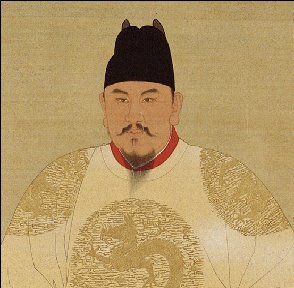
Emperor Hongwu - Zhu Yuanzhang
Founder of the Ming Dynasty

Emperor Hongwu, the first Ming emperor had just driven out the Mongols from the Middle Kingdom. Like many Chinese emperors before him, and much like the former Mongol rulers who had ruled China from Dadu (modern day Beijing), Emperor Hongwu owned a Royal Chamber or harem where lived, or so he hoped anyway, the most gorgeous creatures in the country and beyond. 

Who were these women? Where did they come from? Standards of beauty vary enormously between historical periods and cultures. What were the primary physical attributes that rendered a woman attractive in Ming China? And were these women happy? 

To answer these questions, we travel back in time to the Yingtian Palace. Here, in the Inner Palace, only the emperor, his eunuchs and the court ladies or maids can usually enter. But today for this exclusive interview with a Ming concubine, we have been permitted entry by a corrupt eunuch. We will sit under a pavilion in the Imperial Gardens and we will ask the delicate Zhou Mai, a fifth-ranking concubine, to tell us a little bit about herself, her beauty routine and what her experience has been so far living in the palace.

Greetings Zhou Mai. Where do you come from?
I was born in Korea. My country pays tribute to the Hongwu Emperor. This is a demonstration of my people's loyalty as vassals to the Middle Kingdom. In exchange, Korea is offered protection from pirates. It can also trade with the people of the Middle Kingdom. 

Is it true that you were sent to the Middle Kingdom as a gift?
Yes. Last year, the Hongwu emperor asked that my country pay tribute by sending him one hundred virgins. I was one of the girls chosen to be his concubine.

How old are you?
I am thirteen.

Did you want to be selected?
It is an honour to serve in Emperor Hongwu's Royal Chamber. But...I miss my family. My parents were very upset to see me go. 

Where do you live now?
I live here, in Yingtian palace. We girls sleep in the Royal Chamber quarters. We cannot go outside the palace. 

What is your palace title?
Here, I am called Zhou Guiren. Guiren is an honorific title for fifth-ranking concubines like me. I want to be a Guifei. This is a first-ranking concubine. I have much to learn. I can only become Guifei if the emperor is pleased with me or if I bear him a son.

What were the reasons you think you were selected? 
I was told my skin was as pure as jade and white as glistening snow. In the Middle Kingdom and Korea, fair skin is very important. Also my breasts are not too big as I have bound them tight from an early age with strips of cloth. Having big breasts is seen as salacious. I think also, I have a lithe waist and have always been encouraged to shuffle graciously with tiny steps. I am well-spoken and have a good voice.

I noticed that you do not have bound feet. Do not the women of the Middle Kingdom bind their feet?
We Koreans do not bind our feet.   
Yes, footbinding is increasing in the Middle Kingdom today.  It is called "lotus feet". 

So some women in the Middle Kingdom have bound feet and some do not?
The Mongols tried to outlaw the custom. They have since been pushed out, back to the North. Emperor Hongwu, is against all Mongol practices. Now footbinding is becoming popular again all over The Middle Kingdom. 
But there are still exceptions. Even Emperor Hongwu's consort, Empress Ma does not have bound feet. She is from Mongol stock.  She even rides horses.

Why do you think men of the Middle Kingdom like bound feet?
Any man with a good reputation prefers his woman to stay in the home so she cannot invite illicit affairs. A woman with bound feet cannot easily walk. So she is less likely to leave her husband if she wanted to. 
Also only country women who work outside in the fields need use of their big feet. So for a man to be seen as wealthy, it is best that his woman has lotus feet. 

Do you wish you had bound feet?
(frowns) Yes...and also...no. 

Why?
Lotus feet are seen by some women as more precious than a beautiful face. They say men are excited by lotus feet. They play games with them in bed. But then I know that lotus feet cause a lot of painIn the Royal Chamber, girls with bound feet need help to squat for toileting. They are dependent on their chamber maids. I often hear concubines complain about pain.

What do you do with your time, Zhou Guiren?
We do many things. We like to read books. They are not illicit tales from the streets, they are mostly virtuous books written by Empress Ma, Hongwu's consort. Also the educated ladies from Suzhou in the south come to visit us often. They are very talented. They teach us songs and music. They teach the younger girls to read.  I like to embroider animals on silk. I am getting better at silk embroidery. 

Do you go outside your chamber?
Yes, when it is not too hot. We ask the eunuchs to bring parasols for us and we play in the Inner Palace's gardens. We play behind the rocks and sing songs. But we cannot go outside the palace. On special occasions, some Guifeis will travel on sedan-chairs and accompany the emperor to visit the other palaces where the princesses and princes live. 

You mentioned illicit tales before. What are those?
They are road-side tales told by ambulant storytellers in the cities and the country. I am told they can be crude and not virtuous. Some tales have been made into bound books by the publishers of Fujian province in the south. But we are not permitted to read these. We are only allowed virtuous literature. Women should be modest, chaste and Tend to the Gentlemen. This is our highest calling.


Long silk pleated skirt, blue is usually a colour no commoner can wear
The ribbon tied coat is a little passe, Zhou Mai preferring buttons

What are you wearing Mai?
(stands) On my feet, I have slippers with peony pattern embroidery. I am wearing a long white silk pleated skirt. Pleated skirts are the latest fashion in the palace. On top of this, I have a silk peach waist coat with porcelain buttons. Buttons are very good to have. 
I like being a concubine because we have beautiful silk clothes. Country people can only afford cotton or hemp.

Did you do your hair yourself?
(smiles) My chamber maid helped me with this double bun. She picked blue flowers from the imperial garden and pinned them to the sides above my temples. One of the princesses gave me a gift of this cobalt tasseled pin and I have pushed it into my bun. This type of pin is only for girls who have reached menstruation. 


Ming Dynasty Hair ornaments 
Tasseled pins adorn double buns

Tell me more about your makeup and beauty routine, Mai.
It is important to keep the skin white and so we use powder from crushed shells. After covering my face in powder, I draw-in my eyebrows into black crescent shapes and spread a vermillion-tinged pomade on my cheeks to bring them to life. 
I use a vermilion lip balm to draw a cherry-shaped pout in the centre of my lips. It should not go out too much, only three quarters of the lip should be covered. 
On my nails, I have a red nail tint made of egg-whites, beeswax, balsamic dye and Arabic gum. Last month, my nails were tinted in black but I decided to change today. I wear a scented pouch around my waist to give off pleasant smells wherever I walk. (touches earrings) These jade earrings are a gift from the emperor. (smiles)
All this is what men find beautiful.


The cherry-shaped pout in latest vermilion


You mentioned eunuchs before, what are those?
They are men who have been castrated. They cannot have children. They are the only men we see in the palace aside from the emperor. 

What do you think of eunuchs?
Some are not to be trusted. But others are very helpful. It depends. They are from all over the country including the south in Yunnan province. Others come from as far as Annam, Korea and Manchuria. There are some eunuchs who never wanted to be eunuchs but they had no choice because they were made prisoner by the emperor's men and taken by force, like the Mongol eunuchs for example.

What is the role of eunuchs in the palace?
They work hard in the palace. They do everything for us. They bring toilet paper, empty chamber pots, call onto female physicians and they organise our foot warmers, parasols and sedan-chairs. They will bring us to the emperor's night chamber whenever we are selected to spend the night with him. They do everything in the palace but they cannot read.

Why can they not read?
(whispers) The Hongwu Emperor has forbidden that eunuchs learn how to read. He believes they should not be trusted with important documents. 

What about the Royal Chamber...do you girls trust the eunuchs?
(hesitates) Well...I will tell you something that the emperor does not know...yet. Some of the concubines have eunuch lovers. They meet them in secret... 

Why do you think the concubines seek a eunuch lover?
I don't know. Because...they are lonely maybe. They miss their family...but eunuchs are always here for them. Also some of the concubines can seek the attention of eunuchs when they are sad or lonely. You see, even if a concubine has children, these are taken away from them as soon as they are born and sent to the nursery in the Eastern side of the palace. 

Do you think you will ever return to your homeland?
Maybe. I think it is not likely. When concubines are old, around thirty years, they are sent to do laundry or become maids. They also cannot remarry with a man from the Middle Kingdom, only with a foreigner. Maybe I will die an old maid. But I am still lucky. I could be on a farm working hard on the land with not much food to eat. The emperor knows everything about famines. You see, when he was a young boy he lost most of his family in the Anhui famine. (smiles) So I am lucky living here in the palace.

Thank you, honourable Mai Guiren, for your time. It has been a pleasure. 
May the path you walk on be sprinkled with the most fragrant flower blossoms and may you live a long life.

An erotic embossment on a brick - Ming Dynasty (1368-1644)
Courtesy of the Chinese Sex Museum in Xi'an
Published in AvaxNews.com

Did you like this post? 
A new historical novel, The Ming Storytellers crafts a mysterious tale of imperial concubines and eunuchs set against the political intrigue and obsessions lurking in the palaces of Beijing and Nanjing. Set in the early Ming Dynasty, The Ming Storytellers brings to the fore the lives of imperial concubines during this period. It is available internationally from Amazon (Paperback and Kindle Editions), Barnes & Noble NOOK and Apple's iBookstore.